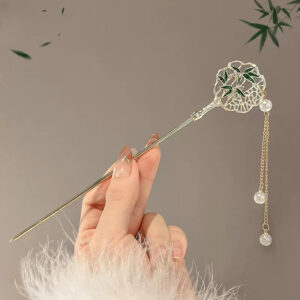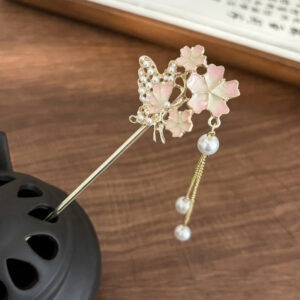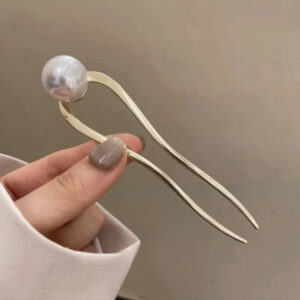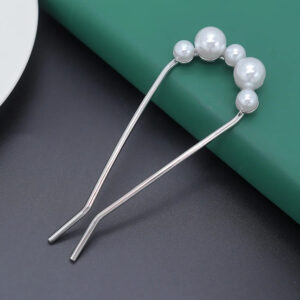
A hair stick is about as simple as hair accessories get: a smooth rod slipped through a coiled bun. It has no clasp to bite down and no band wrapped around one point. That simplicity is part of the appeal, and it’s why many people wonder whether it’s actually better for their hair, or whether all that twisting and pinning is quietly causing harm.
The honest answer sits in between. A hair stick doesn’t damage healthy hair just by being in it. What causes trouble is the way it’s worn: how tightly the bun is wound, how rough the stick is, how it goes in and comes out, and how long the same patch of hair carries the load.
The short answer
Worn in a comfortable bun, with a smooth stick, on dry hair, and taken out carefully, a hair stick is a gentle way to put hair up. Damage usually comes from one of five things:
- Tension: a bun wound so tight it pulls at the roots
- Repeated stress in one spot: the same anchor point, day after day
- Rough or sharp surfaces: splinters, chipped lacquer, metal burrs, snagging decorations
- Force: pushing through a tight knot or pulling the stick straight out
- Fragile hair: hair that’s wet, or already weakened by heat or chemical treatment
There’s very little research on hair sticks specifically. The most useful guidance comes from dermatology advice on tight hairstyles in general, which applies directly to buns.
Where hair-stick damage actually comes from
Tension at the roots
Constant pulling on the scalp can lead to traction alopecia, hair loss caused by repeated strain on the follicles. The American Academy of Dermatology lists tightly pulled buns and ponytails among the styles that can cause it, and notes that the hairline is often where it shows first. Caught early, it can usually be stopped or reversed. Left alone for long enough, the loss can become permanent.
A hair stick doesn’t create tension by itself. The tension comes from the bun. Two habits tend to push it too far:
- Over-winding the bun to make the stick hold. People with fine or slippery hair often tighten the bun when the real problem is grip or angle.
- Anchoring too much scalp hair, too tightly. Catching some of the flat hair at the base is what keeps a stick in place. But if that small patch is also wrenched tight, it carries the whole bun’s weight for hours.
Repeated stress in one spot
If you always wind your bun in the same place and push the stick through the same path, the same strands take the same friction every day. Over weeks, that can roughen the hair in that spot. Changing where the bun sits matters more than most people expect.
Rough, chipped or sharp surfaces
A stick that looks smooth can still snag. Common culprits:
- splinters or raised grain on wood or bamboo
- chipped lacquer or paint
- burrs along seams on metal sticks
- sharp edges on cast or filigree decorative heads
- tassels, chains and dangling parts that tangle into the bun
A quick test: draw the stick gently through a pair of sheer tights or a silk scarf. If it catches fabric, it will catch hair.
Force going in and coming out
Pushing a stick through a knot that won’t give, or yanking it straight out at the end of the day, breaks strands. Insertion should feel like gentle resistance, not a fight. For removal, follow the path the stick took going in and let the bun loosen as you go. Our guide on how to remove a hair stick without pulling hair walks through this step by step.
Hair that’s already fragile
Dermatologists advise handling wet hair gently, and a damp bun is easier to over-stretch than a dry one. It’s better to let hair dry, at least mostly, before putting it up. A review of studies by Johns Hopkins dermatologists in the Journal of the American Academy of Dermatology also found that tension does more harm to hair already weakened by chemical straightening or frequent heat styling. If your hair is processed, keep buns looser.
Signs your hair stick bun is too tight
Your scalp usually tells you before your hair does. Loosen or take down the bun if you notice:
- an aching or sore scalp, especially at the anchor point
- stinging or tenderness that lingers after you take the stick out
- the skin “tenting,” lifting where the hair is pulled
- short broken hairs around the hairline or temples
- a feeling of relief the moment the bun comes down
That last one is the simplest check. If taking your hair down feels like a release, it was too tight.
Is it bad to wear a hair stick all day?
Not inherently. There’s no set number of hours after which a hair stick becomes harmful. Tension matters far more than time: a loose, comfortable bun can stay up all day, while a tight one can start aching within an hour or two.
If you wear a hair stick most days:
- Check in midway through the day. If your scalp feels tight, loosen the bun and re-set the stick.
- Move the bun around. Alternate between a high bun, a low bun and an off-centre one so different strands carry the load.
- Give your hair days off. Dermatology guidance recommends alternating styles and taking regular breaks from pulled-back hair. Wear it down, or in a loose braid, some days.
- Save heavy pieces for shorter wear. Large decorative heads add weight, which adds pull. Lighter, plainer sticks are better for everyday wear.
Should you sleep in a hair stick bun?
Take the stick out before bed. Lying on a rigid rod presses the bun into your scalp at one fixed point. Turning over can twist the hair around the stick, and the stick itself can bend, crack, or press its tip into your scalp or pillow. The AAD names hair rollers worn to bed as a traction risk for a similar reason: hours of pull on the same spot, with no chance to adjust.
If you want your hair contained overnight, some gentler options are:
- a loose, low braid
- a loose bun on top of the head held with a soft fabric scrunchie (dermatologists recommend covered elastics over bare bands)
- a silk or satin scarf or bonnet
Many people also find a satin pillowcase reduces friction and tangling, though that’s a comfort choice rather than a fix for tension. In the morning, brush out gently and put the stick back in fresh.
How to wear long hair pins safely
Longer hair sticks and pins hold larger buns well, but the extra length means the tip has more reach. A few habits keep them comfortable and safe:
- Choose a rounded or blunted tip. Tapered is fine. Needle-sharp is unnecessary for holding hair.
- Match the length to your bun. A stick that sticks out far past the bun is easier to knock and gives more leverage to pull on the anchor. One that’s too short tempts you to wind the bun tighter.
- Angle the exposed tip away from your skin. Make sure the end that comes out the far side isn’t pointing toward your neck, ears or face.
- Never push through resistance at the scalp. If you feel the tip scratch, back out and re-angle. The stick should travel through the hair, not along the skin.
- Take it out for certain activities, such as sports, wearing a helmet, long drives where you’ll rest your head against a headrest, and lying down.
- Keep sticks out of reach of small children, and be careful holding young children who grab at hair.
- Retire damaged sticks. A cracked wooden stick, a bent metal one, or a stick with a burr that catches fabric isn’t worth the risk to your hair.
Choosing a gentler hair stick
Material matters less than finish. A well-made wooden stick and a well-made metal one can both be gentle. A rough version of either can snag. Look for:
- a smooth surface all the way to the tip
- a length that suits your hair volume and bun size
- a weight you can wear comfortably for hours
- decorative heads with no sharp prongs or edges where they meet your hair
For help with length and materials, see our guide to Chinese hair sticks for buns.
A gentler routine, start to finish
- Start with dry, detangled hair. Finger-comb or use a wide-tooth comb.
- Twist the bun firm, not tight. Turn your head side to side. You should feel the bun, not a pull at the roots.
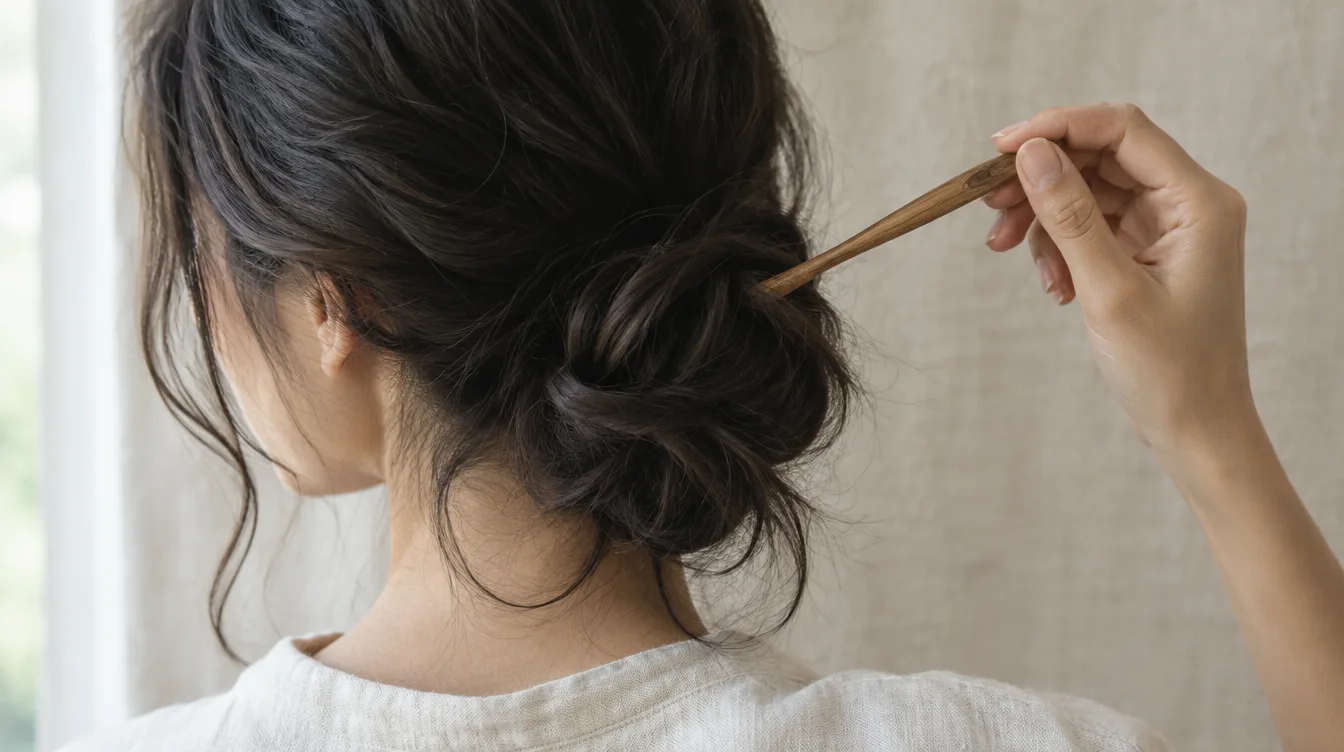
- Insert with a gentle rocking motion, catching a small amount of hair at the base without wrenching it tight.
- Check comfort after the first hour and adjust before it starts to ache.
- Remove by reversing the path, supporting the bun with your other hand.
- Let the hair rest down for a while before putting it up again.
If your bun slumps unless it’s wound tight, the problem is usually the technique rather than the tension. Our guide on how to stop a hair stick bun from sagging covers better fixes than pulling harder.
Notes for different hair types
- Fine or slippery hair: This is where over-tightening is most tempting. Add grip and support instead. How to use hair sticks in fine, slippery hair explains the techniques, and a few discreet bobby pins used with a hair stick can share the load.
- Thick or heavy hair: The bun’s weight is its own source of pull. Two sticks crossing can spread the load. Keep the bun lower, and take breaks.
- Curly or coily hair: Smooth sticks matter even more, since texture catches easily. Dermatologists note that some tightly curled hair types are more vulnerable to traction, so err on the side of looser buns.
- Chemically treated or heat-styled hair: This hair is already weaker, so keep tension low and wear time sensible.
When to see a dermatologist
See a board-certified dermatologist if you notice thinning at your hairline, temples or the spot where your bun usually sits, broken hairs that keep appearing, or scalp pain, bumps or tenderness that doesn’t settle after you stop wearing tight styles. Traction-related hair loss responds best when it’s caught early.
FAQ
Are hair sticks better for your hair than hair ties?
There’s no direct research comparing the two. Both can be gentle when the hair is held loosely. A hair stick avoids a band squeezing around one point, but it relies on an anchor at the base of the bun. Either one causes problems if it’s pulled tight.
Can a hair stick cause a bald spot?
Not by itself. Repeated tight tension in the same place over a long time can lead to traction alopecia, which often shows up at the hairline or wherever the pull is strongest. Loosening the bun, changing its position and taking regular breaks lowers that risk.
Can I put a hair stick in wet hair?
It’s better to wait until your hair is mostly dry. Wet hair needs gentle handling, and a damp bun is easier to over-tighten.
Do metal hair sticks damage hair more than wooden ones?
Not necessarily. The finish matters more than the material. Check any stick, wood or metal, for splinters, chips, seams or burrs that could snag hair.
Can I wear a hair stick every day?
Yes, as long as the bun is comfortable. Vary where it sits and wear your hair down or loosely braided on some days.