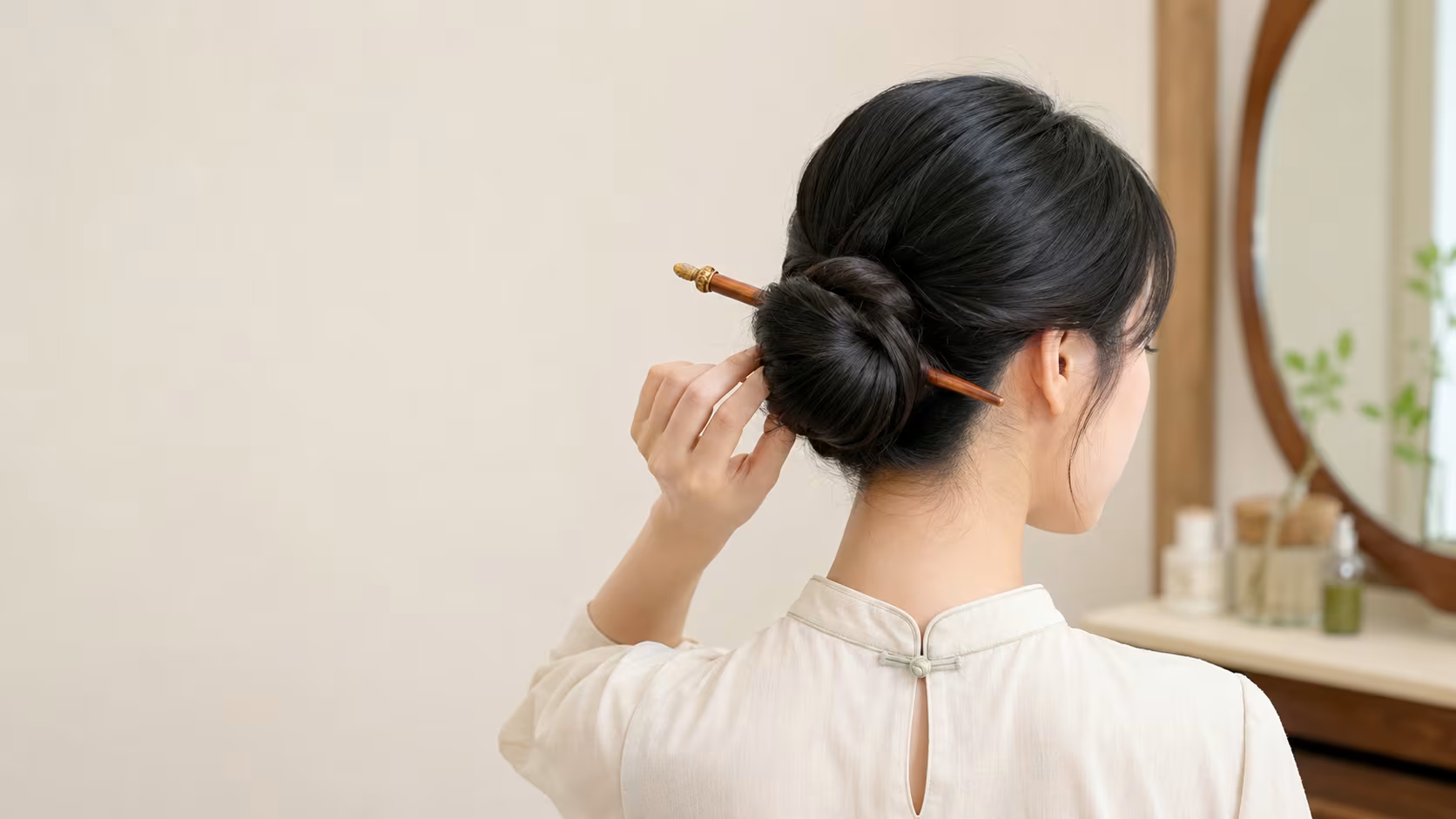
A sagging hair stick bun is usually caused by one of three problems: the hair was wrapped without enough tension, the bun sits too far away from the scalp, or the stick passes only through the bun without catching the hair underneath it.
The most reliable solution is to create a compact base, keep the wrapped hair close to the head, and insert the stick through three layers: the outer edge of the bun, a small section of scalp hair, and the body of the bun.
Once you understand that anchoring path, a hair stick bun becomes much easier to secure without excessive pulling, repeated adjustments, or a large collection of hidden pins.
Why Does a Hair Stick Bun Sag?
A hair stick does not hold a bun simply by passing through the middle. It works by creating tension between the wrapped hair, the stick, and a small amount of hair close to the scalp.
When the bun begins to slide downward, one or more parts of that structure have failed.
Common causes include:
- The initial twist was too loose.
- The bun was wrapped outward instead of close to the scalp.
- The stick caught only the outer coils.
- The bun contains more hair than the stick can control.
- The stick is too short, too smooth, too heavy, or incorrectly angled.
- Freshly washed hair is too slippery.
- The bun is positioned higher than the hair can comfortably support.
- A large decorative ornament is pulling the hairstyle downward.
- The hairstyle needs an elastic, fork, second stick, or hidden pin for additional support.
The problem is therefore not always the hair stick itself. Stability depends on how the hair is prepared, where the bun is placed, how tightly it is formed, and how the stick interacts with the base.
How to Stop a Hair Stick Bun From Sagging
Use this basic method before trying more complicated styles.
1. Prepare the Hair
Brush or finger-comb the hair until major tangles are removed. The hair does not need to be perfectly smooth, but tangled sections can create uneven tension and make the stick difficult to insert.
Very clean, silky hair may benefit from a small amount of dry shampoo, texturizing spray, styling powder, or light mousse. Apply only enough to improve grip. Too much product can make the hair stiff, dusty, or difficult to rearrange.
For curly or coily hair, avoid brushing the hair dry solely to create a smooth bun. Use your normal detangling method and work with the natural texture rather than forcing every strand into a tightly polished shape.
2. Choose a Stable Bun Position
A high bun can look graceful, but it also places more weight above the natural support point of the head. If your bun repeatedly slides, begin with a middle or low position.
Gather the hair where you want the center of the finished bun to sit. Hold the base firmly against the head before twisting.
Do not allow the ponytail base to drift away from the scalp. Even a small gap gives the entire bun room to sink once the hair relaxes.
3. Twist With Consistent Tension
Twist the gathered hair in one direction while keeping the base steady with your other hand.
The twist should feel controlled rather than painfully tight. Hair that is twisted too loosely cannot create enough resistance around the stick. Hair that is twisted too aggressively may pull at the scalp, strain fragile strands, or make the finished style uncomfortable.
Maintain similar tension from the base toward the ends. If the first half is tight but the remaining length is loose, the outer coils may expand and allow the bun to tilt.
4. Wrap the Hair Close to the Scalp
Begin coiling the twisted length around its base. Each new coil should lie close to the previous one and reasonably flat against the head.
Avoid building a tall, cone-shaped bun unless the style is specifically designed for that form. A compact bun distributes its weight across a wider area and gives the stick more hair to pass through.
Keep one hand over the bun while wrapping. This prevents the center from lifting away from the scalp.
Tuck the ends under an outer coil where possible. Do not depend on the hair stick to capture a loose tail that is hanging several centimetres away from the bun.
5. Enter Through the Outer Edge
Place the point of the hair stick near the outer edge of the bun, not directly into the center.
Catch a small section of the outer coil. The stick should pick up enough hair to control the bun but not such a large section that it becomes difficult to turn.
Starting at the edge creates leverage. Pushing the stick straight through the center often produces a hairstyle that appears secure for a few minutes but gradually rotates or drops.
6. Catch Hair Close to the Scalp
After entering the outer coil, angle the point toward the head and gently pick up a small section of hair from the base.
This is the step many beginners miss.
The stick needs to connect the bun to the hair lying against the scalp. Without this anchor, the stick may hold the wrapped coils together while allowing the entire bun to move as one loose unit.
Do not scrape the scalp or push the point directly against the skin. The aim is to catch a thin layer of hair, not to press the stick tightly into the head.
7. Pivot and Pass Through the Bun
Once the stick has caught the base hair, rotate or pivot it so the point travels back through the main body of the bun.
The exact movement depends on the hairstyle and the direction in which the bun was wrapped. In many styles, the stick initially points away from the direction it will eventually travel. After catching the scalp hair, it is turned and guided across the bun.
Push the stick through slowly. It should meet resistance from the wrapped hair, but it should not require force.
Allow the point to emerge through the opposite side of the bun. Both ends should remain visible enough to remove the stick safely.
8. Test the Hold
Release the bun gradually rather than taking both hands away at once.
Gently move your head from side to side. The bun should remain close to the scalp without pulling sharply in one area.
A small amount of movement is normal. The goal is a comfortable, balanced hold, not an immovable structure.
If the bun immediately tilts, drops, or rotates, remove the stick and rebuild it. Repeatedly pushing the stick through a loose bun rarely fixes the underlying problem.
The Correct Hair Stick Insertion Path
A useful way to remember the insertion technique is:
Outer bun, base hair, inner bun.
First, the stick enters a small section of the outer coil. Next, it catches hair near the scalp. Finally, it turns and passes through the thicker central portion of the bun.
This creates opposing tension. The outer coil pulls in one direction, while the base hair and inner bun resist movement in another.
By contrast, a stick that travels in a simple straight line through the bun may function only as a decorative bar. It can prevent the coils from completely unravelling, but it may not prevent the hairstyle from sliding downward.
The point should not travel so close to the scalp that it causes pressure. A secure hair stick bun should feel supported across the bun rather than concentrated at one painful point.
How Tight Should a Hair Stick Bun Be?
The bun should be tight enough to hold its shape before the stick is inserted, but not so tight that it causes scalp pain.
A useful test is to form the bun and hold it with one hand. If the entire coil immediately expands or slips apart as soon as your grip relaxes slightly, the twist probably needs more tension.
However, tighter is not always better. Excessive tension can cause:
- Headaches
- Tenderness at the roots
- Pulling around the hairline
- Broken strands
- Difficulty inserting or removing the stick
- A bun that feels secure initially but becomes uncomfortable later
For everyday wear, aim for firm, even tension. If a hairstyle requires painful force to stay in place, change the structure or add another support rather than tightening it further.
Choose the Right Hair Stick
Technique matters, but the accessory must also suit the volume and texture of the hair.
Length
A functional hair stick should pass through the main body of the bun and emerge on the opposite side.
A stick that is too short may not engage enough hair. A very long stick can create excessive leverage, catch on clothing, or become inconvenient when sitting in a high-backed chair.
The useful length depends on the size of the finished bun rather than hair length alone. Thick hair wrapped into a broad bun usually needs a longer working section than fine hair arranged into a compact coil.
Surface Texture
Very smooth metal, polished stone, glass, or glossy resin may slide more easily in silky hair. Wood and other lightly textured materials often provide more grip, although rough or unfinished surfaces can catch and damage strands.
Inspect the stick for:
- Splinters
- Sharp seams
- Rough edges
- Loose decorations
- Exposed wire
- Adhesive residue
- Points that are too sharp for comfortable use
The surface should be smooth enough to pass through the hair without snagging while still offering suitable control.
Shape
Straight sticks work well for many basic buns, but a gently curved stick may follow the contour of the head more comfortably.
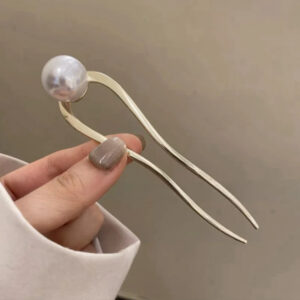
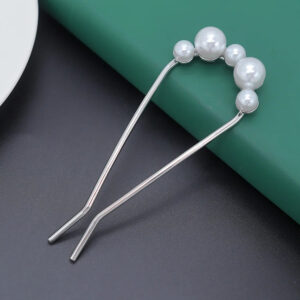
Hair forks provide two or more prongs and can distribute pressure across a larger area. They are often useful for heavy, thick, or slippery buns that rotate around a single stick.
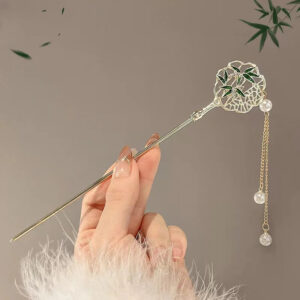
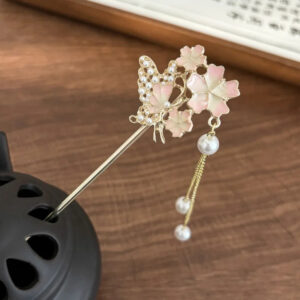
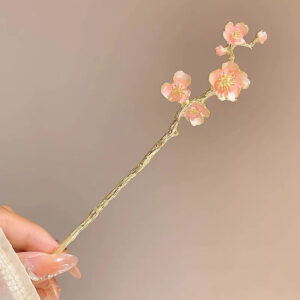
Decorative hair pins and Chinese-inspired hair ornaments may be designed primarily for visual effect. A large flower, metal ornament, bead cluster, or tassel does not automatically mean the piece can support the entire hairstyle.
When an ornament is heavy or delicate, secure the bun first and use the decorative piece as a secondary accessory.
Fixes for Fine or Slippery Hair
Fine hair can form a small bun that gives the stick limited material to grip. Silky hair may also slide along a smooth accessory.
Try these adjustments:
- Style the hair when it is dry rather than damp.
- Add a small amount of texturizing product.
- Use a compact bun instead of a wide, loose coil.
- Position the bun slightly lower.
- Choose a slimmer stick that can catch a controlled section of hair.
- Use a lightly textured accessory rather than an extremely polished one.
- Cross two sticks through the bun.
- Begin with a small elastic ponytail if the base keeps collapsing.
- Add one or two discreet U-shaped pins to secure the outer coil.
An elastic is not a failure of technique. It can create a stable foundation while still allowing the hair stick to remain the visible focal point.
Avoid excessive backcombing merely to create grip. Repeated teasing can make the hair difficult to detangle and may be unnecessary for a simple everyday bun.
Fixes for Thick, Heavy, or Very Long Hair
Long hair can create a large bun with significant weight. A single narrow stick may hold the shape but struggle to keep the entire mass close to the scalp.
Several methods can improve stability.
Use a Flatter Bun
Spread the coils across the back of the head instead of stacking them outward. A flatter bun reduces leverage and keeps its center of weight closer to the scalp.
Divide the Hair
Separate the hair into two sections. Form a small central bun with the first section, then wrap the second section around it.
The inner bun creates a stable core, while the outer section adds shape without placing all the tension on one twist.
Use Two Sticks
Insert two hair sticks in a crossed or slightly parallel arrangement. Each stick should catch base hair rather than passing only through the bun.
Two sticks can distribute the load more evenly, but they should not be forced into the same narrow path.
Try a Hair Fork
A fork can control a wider section of hair and reduce rotation. Choose a size that can pass through the bun without extending excessively beyond it.
Add a Hidden Foundation
A small elastic, spin pin, U-pin, or compact hair net can support the underlying structure. This is particularly useful for long events, bridal hairstyles, stage wear, or situations in which the bun must remain secure for several hours.
Fixes for Curly or Coily Hair
Curly and coily hair often has natural grip, but density and shrinkage can make a stick difficult to guide through the bun.
Work in sections if necessary. A large section can be twisted or arranged into a bun first, with the remaining hair wrapped around it.
Use a hair stick with a smooth, polished surface and a rounded point. Avoid accessories with unfinished edges, exposed wire, or decorations that can catch individual curls.
Do not force a thick stick through dense hair. If the accessory meets strong resistance, remove it and choose a different path or a slimmer design.
A hair fork may provide better control because it can hold a wider portion of the hairstyle without concentrating pressure in one narrow channel.
Most importantly, keep the style comfortable. The bun does not need to be compressed into a perfectly smooth circle to be secure.
Why Your Bun Sags After an Hour
A bun that feels secure initially but drops later often contains uneven tension.
The outer coils may gradually expand as the twisted hair relaxes. Natural movement, humidity, the weight of an ornament, or repeated contact with clothing can make the problem more noticeable.
Check these points:
- Is the bun touching the scalp or standing away from it?
- Did the stick catch base hair?
- Is most of the weight below the stick?
- Are the ends tucked securely?
- Is the ornament heavier on one side?
- Is the stick rotating inside the bun?
- Does the hairstyle loosen when you turn your head?
- Is the bun relying on a single small coil for support?
Rebuilding the bun with a flatter shape often works better than inserting more pins into the same loose structure.
For all-day wear, test the hairstyle at home before using it for a wedding, formal event, performance, or extended travel.
Common Hair Stick Bun Mistakes
Pushing the Stick Straight Through the Center
This may keep the bun from unravelling, but it does not necessarily anchor it to the head.
Begin at the outer edge, catch base hair, and then turn the stick through the bun.
Making the Bun Too Loose
A soft, loose bun can look attractive, but it still needs a stable internal structure. Create a firm base first, then gently loosen selected outer sections if a softer appearance is desired.
Making the Bun Too Far From the Scalp
A gap between the bun and the head allows the hairstyle to tilt and descend. Keep the initial wrap close to the scalp.
Choosing a Heavy Decorative Stick
A large metal ornament or dangling decoration may pull against the hairstyle. Use a separate functional support if the decorative piece is too heavy to act as the primary fastener.
Using a Stick That Is Too Thick
A thick stick can separate the coils and reduce tension. It may also be uncomfortable in a small bun.
Match the diameter of the stick to the density and scale of the hairstyle.
Repeatedly Reinserting the Stick
Every unsuccessful insertion can loosen the bun further. When the structure has shifted, remove the stick, untwist the hair, and begin again.
Ignoring Comfort
A secure bun should not cause sharp pressure, tingling, or a headache. Remove and reposition the accessory if discomfort develops.
When to Use an Elastic or Additional Pins
A single hair stick is not required to hold every bun, hair type, or occasion.
Use an elastic when:
- The ponytail base repeatedly loosens.
- The bun must remain stable for many hours.
- The hair is extremely smooth.
- The hairstyle will support a heavy ornament.
- You are still learning the insertion technique.
- The bun will be worn during a formal event or active day.
Use hidden pins when:
- Short layers escape from the bun.
- The ends cannot be tucked securely.
- One side of the bun lifts away from the head.
- A decorative tassel or ornament needs separate support.
- You want a soft outer shape over a firm internal base.
For a clean appearance, choose pins close to the hair color and place them beneath the outer coils.
Functional Hair Sticks and Decorative Chinese Hair Ornaments
Modern shops may use terms such as hair stick, hair pin, Chinese hairpin, bun pin, and decorative hair ornament interchangeably. Historically, Chinese hair ornaments included several forms and names, but modern retail categories do not always correspond precisely to historical terminology.
For a practical hairstyle, focus first on construction.
A functional stick usually has:
- A smooth shaft
- A manageable weight
- A point that can enter the hair safely
- Enough usable length to cross the bun
- Decorations that do not interfere with insertion
A decorative ornament may have a larger top, hanging tassels, flowers, beads, metalwork, or other details. It can still be worn with a bun, but it may need an elastic, fork, or hidden pins beneath it.
This distinction is especially useful for bridal and hanfu-inspired styling. The visible ornament can be chosen for coordination and scale, while less visible supports provide the necessary stability.
Hair Stick Safety and Comfort
Long or pointed hair accessories require practical care.
Insert the stick slowly and away from the scalp. Never use force when the point becomes trapped in a dense section of hair.
Avoid wearing long, sharp, fragile, or heavily decorated sticks while:
- Driving
- Exercising
- Sleeping
- Playing contact sports
- Leaning against a high-backed seat
- Handling small children at close range
Remove the accessory before changing clothes over your head. Store delicate ornaments separately so the shaft, decorative top, and hanging components are not bent or crushed.
A well-secured bun should feel balanced. If the accessory pulls to one side, catches loose strands, or creates persistent pressure, remove it and adjust the hairstyle.
Frequently Asked Questions
Can one hair stick hold a whole bun?
Yes, one hair stick can hold many compact buns when it catches the outer coil, base hair, and inner part of the bun. Thick, heavy, slippery, or very long hair may require two sticks, a hair fork, an elastic, or hidden pins.
Why does my hair stick slide out?
The stick may be too smooth, too short, or inserted only through the outer hair. Add texture to slippery hair, create a tighter base, and make sure the stick catches a small section of hair close to the scalp.
Should a hair stick touch the scalp?
It should pass close enough to catch base hair, but it should not press, scrape, or dig into the scalp. Reinsert it at a slightly shallower angle if you feel sharp pressure.
Is a hair stick bun easier with dirty hair?
Hair that has not been freshly washed may have more grip, but it does not need to be dirty. Clean hair can be styled successfully with proper tension and a small amount of texturizing product when necessary.
How do I secure short layers in a hair stick bun?
Use one or two discreet pins for shorter sections, or begin with a small elastic ponytail. Trying to capture every short layer with the hair stick can loosen the main structure.
Are two hair sticks more secure than one?
Two sticks can distribute weight and reduce rotation, especially in a large bun. Both sticks still need to engage the base rather than passing loosely through the same outer coils.
Why does my bun hurt even though it is secure?
The bun may be too tight, too high, unevenly weighted, or anchored at one small point. Lower the bun, reduce the tension, use a lighter accessory, or switch to a fork that distributes pressure more widely.
Keep the Bun Close, Balanced, and Properly Anchored
The most effective way to stop a hair stick bun from sagging is to correct the structure rather than simply adding more pressure.
Build the bun close to the scalp, maintain even tension, and guide the stick through the outer coil, a small amount of base hair, and the central part of the bun. Choose an accessory that suits the bun’s size and weight, and add an elastic, second stick, fork, or hidden pins when the hairstyle needs more support.
A secure bun should stay balanced without feeling painfully tight. Once the anchoring motion becomes familiar, you can adapt it to different hair textures, bun positions, and decorative hair ornaments.