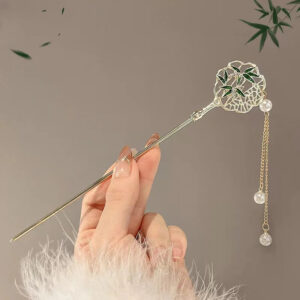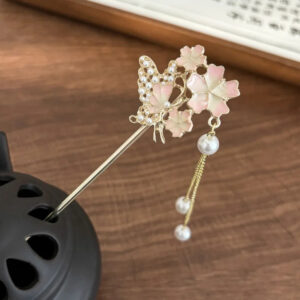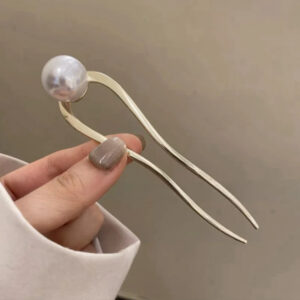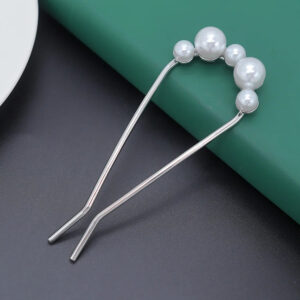
If you have ever fallen in love with traditional Chinese hairstyles, hanfu styling, or old costume dramas, you have probably noticed that Chinese hair ornaments are far more than simple accessories. They hold hair in place, add movement and beauty, and often carry cultural meaning as well.
When people search for the types of Chinese hair pins, they are usually looking for more than a shopping list. They want to know the names, the differences, the history, and why these pieces feel so distinctive compared with modern hair accessories.
In this guide, I want to walk through the most recognizable traditional styles in a way that feels easy to follow. We will look at the best-known ancient hair ornaments, the evolution from ji to zan, and the common materials used in Chinese hair pins through history and into modern fashion.
What are Chinese hair pins?
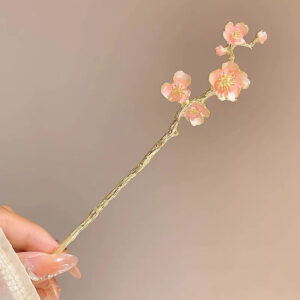
Chinese hair pins are traditional ornaments used to secure and decorate the hair. In ancient China, they were an important part of women’s dress, though some forms were also worn by men depending on period, rank, and hairstyle.
Some pieces were practical and simple. Others were highly decorative, made with gold, jade, pearls, kingfisher-blue ornamentation, or delicate dangling elements that moved while the wearer walked. Over time, hair pins became not only tools for styling hair, but also symbols of elegance, adulthood, status, and taste.
When discussing the types of Chinese hair pins, it helps to know that not every ancient hair ornament is technically the same thing. Some are true pin-like pieces used to fasten a bun, while others are crowns, forehead ornaments, or decorative headpieces. Still, they all belong to the broader world of traditional Chinese hair adornment.
The main types of Chinese hair pins and ancient hair ornaments
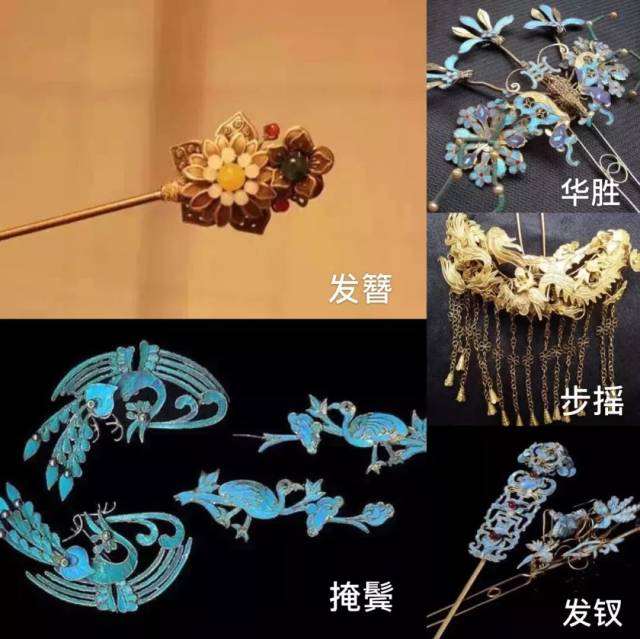
In traditional Chinese culture, eight classic hair ornaments are often mentioned together: ji, zan, chai, buyao, fengguan, huasheng, diàn, and shubi. Some are closer to what we would call hair pins today, while others belong to the wider category of head ornaments.
Let’s go through them one by one.
1. Ji (笄): the earliest form of Chinese hair pin
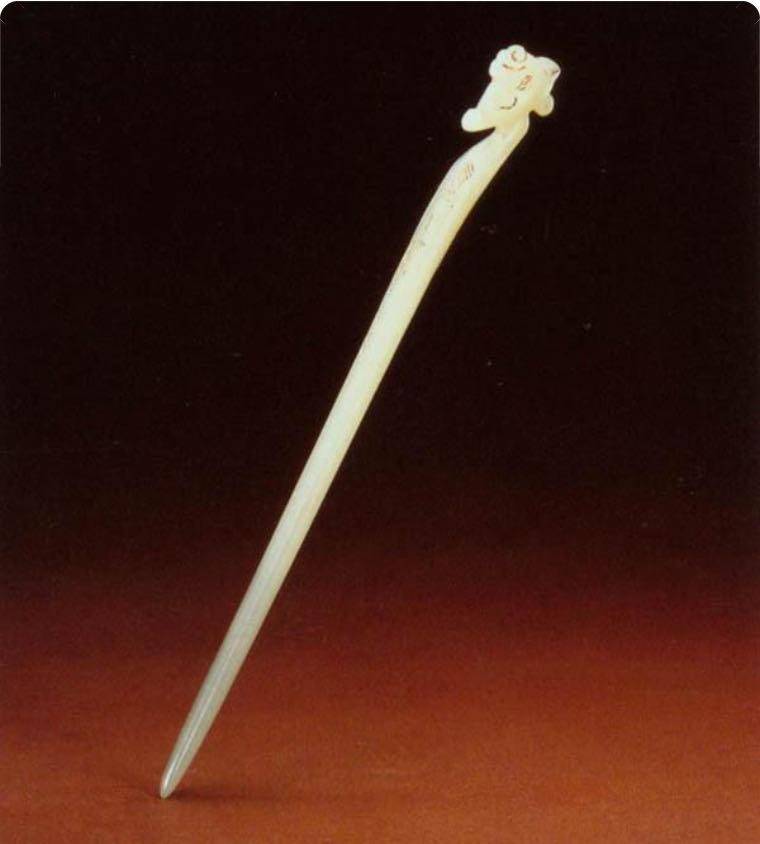
Among all the types of Chinese hair pins, ji is one of the oldest.
A ji was a pin used to fasten coiled or gathered hair, and it could also help secure a hat or headwear. Archaeological finds suggest that early forms already existed in very ancient periods, with pottery and bone examples appearing as far back as Neolithic cultures.
What makes ji especially important is its cultural meaning. In traditional Han Chinese culture, a girl turning fifteen could take part in the ji li, or hairpin ceremony, marking her coming of age. This is where the phrase “ji ji” comes from, meaning that a young woman had reached adulthood.
So while ji may look simple at first glance, it was never just a practical object. It carried social and ceremonial significance too.
2. Zan (簪): the classic Chinese hair pin
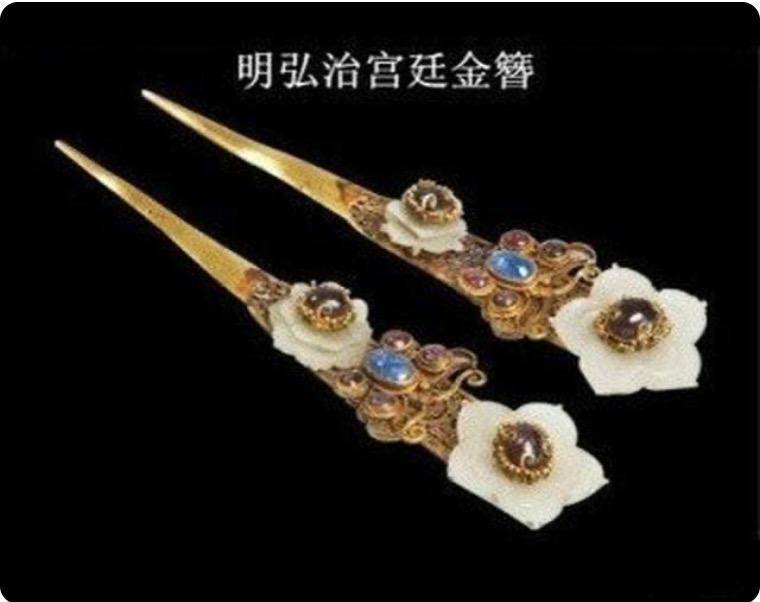
If there is one style most people imagine when talking about the types of Chinese hair pins, it is probably the zan.
The zan developed from the earlier ji and gradually became the more commonly used term. In early Chinese, ji and zan could function as near-synonyms, but over time zan became dominant, especially from the Sui, Tang, and later periods onward.
A zan is usually a long pin used to secure a hair bun or fix the coiffure in place. It could be made from many materials, including:
- gold
- silver
- copper
- jade
- bamboo
- wood
- tortoiseshell
- ceramic
In daily life, zan could be simple and understated. In elite settings, they became richly ornamental, carved, engraved, or set with gemstones. Because of that, the zan sits at the center of traditional Chinese hair aesthetics: functional, elegant, and endlessly adaptable.
3. Chai (钗): the double-pronged hair pin
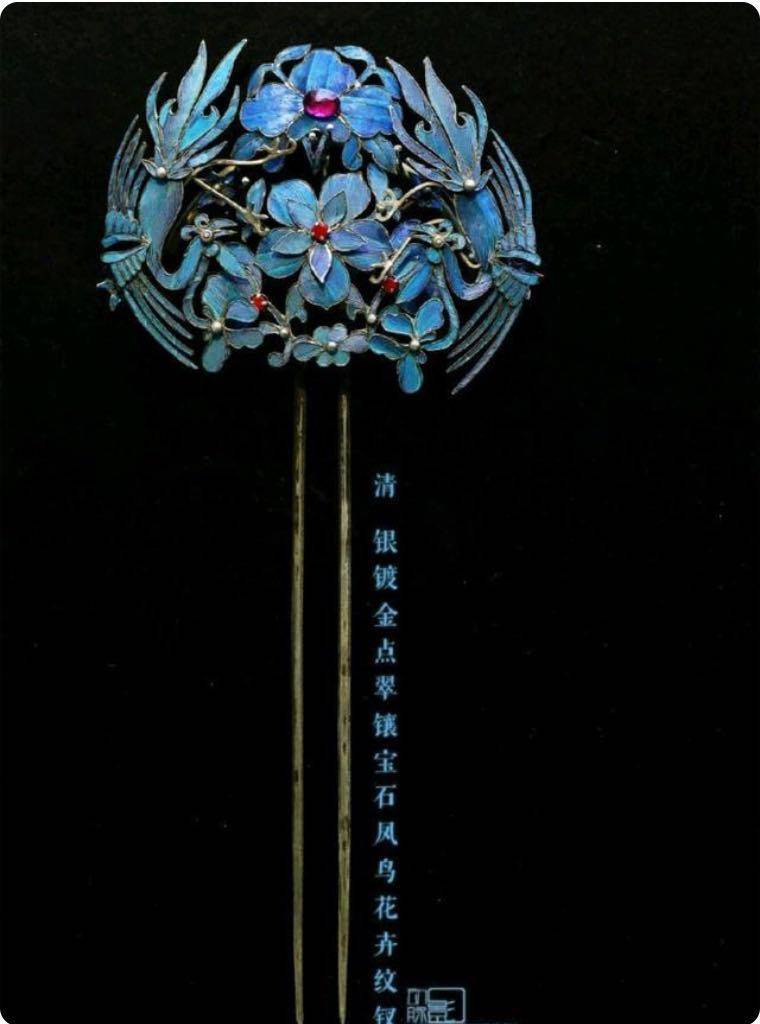
A chai is often confused with a zan, but the two are not exactly the same.
The easiest way to understand it is this: a zan is usually a single-pin form, while a chai is generally made from two prongs or two pin elements combined together. Historically, chai could be beautifully crafted and often came with decorative ends, pendants, or tassel-like details.
Different forms included gold chai, jade chai, and jeweled chai. In literature and visual culture, chai often appears as a more ornate and feminine ornament, associated with refined dress and carefully styled hair.
If you are exploring the different types of Chinese hair pins, this is one of the most useful distinctions to remember:
- Ji: older form, foundational hair pin
- Zan: standard single hair pin
- Chai: double-pronged or paired hair pin form
4. Buyao (步摇): the moving hair ornament
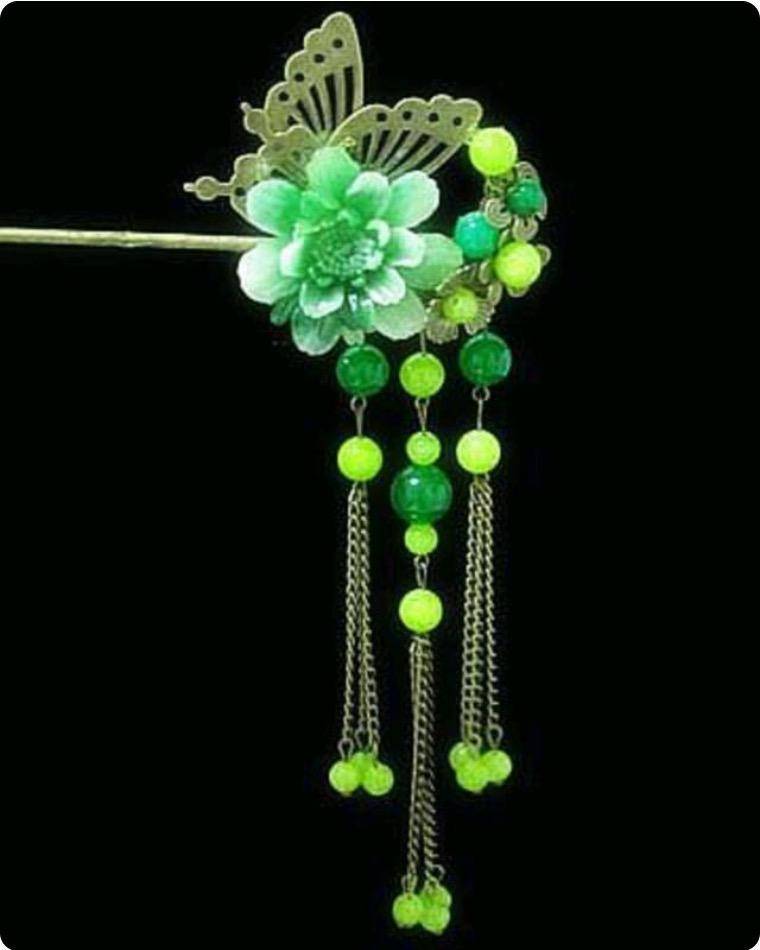
Buyao is one of the most beautiful and recognizable forms in traditional Chinese adornment.
The name literally refers to movement while walking. A buyao is designed so that part of the ornament sways or trembles as the wearer moves. This gives it a light, graceful, almost floating quality that shows up often in paintings, historical dramas, and museum collections.
Traditional buyao pieces were often made of gold and decorated with:
- phoenix or dragon shapes
- flowers and branches
- pearls
- jade
- silver
- agate
Over time, buyao designs became more elaborate, especially after the Six Dynasties period. Because of their movement and brilliance, they created a sense of softness and rhythm around the face. That is part of why buyao still feels so captivating today.
Among the types of Chinese hair pins, buyao is probably the most poetic. It is not just worn; it performs with the wearer.
5. Fengguan (凤冠): the phoenix crown
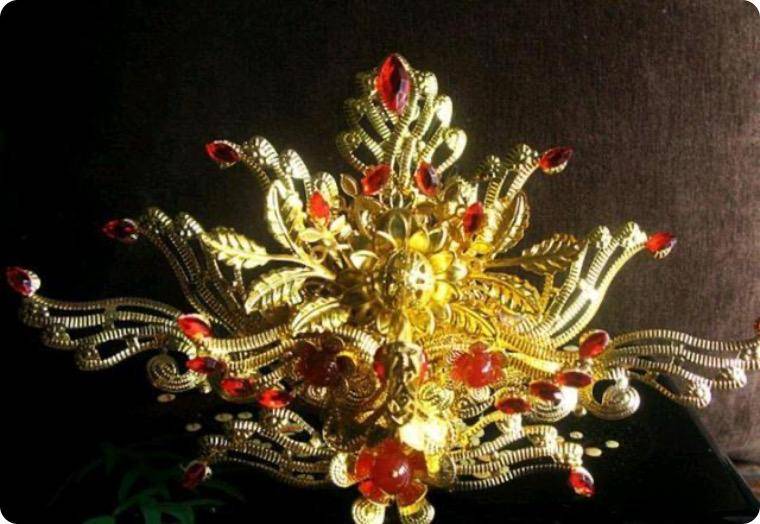
A fengguan, or phoenix crown, is not a simple hair pin, but it belongs to the broader family of traditional Chinese head ornaments.
Historically, the fengguan was associated with empresses and high-ranking consorts. In the Ming dynasty, it was an important ceremonial crown worn on formal occasions such as investiture, temple rites, and court assemblies. Its design grew increasingly luxurious, combining structured crown forms with phoenix motifs and jeweled decoration.
Later, the term could also refer more broadly to ornate bridal headwear worn by women during weddings.
So if you are researching the types of Chinese hair pins, fengguan is worth knowing even though it is technically a crown rather than a pin. It shows how Chinese hair adornment extends beyond a single accessory into a complete system of ceremonial beauty.
6. Huasheng (华胜): floral head ornament
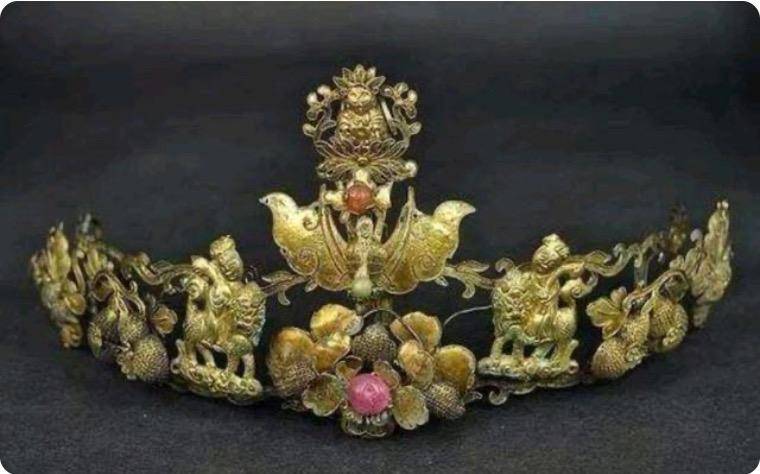
Huasheng refers to a flower-shaped decorative head ornament worn by women in ancient China.
The name itself suggests floral beauty, and classical descriptions associate it with ornate adornment placed at the front of the hair. Huasheng was more decorative than structural, which means it functioned less like a basic fastening tool and more like a finishing ornament that enhanced the hairstyle.
It is a good reminder that many traditional Chinese hair accessories lived in the space between jewelry and hairstyling. They were meant to be seen.
7. Diàn or huadian (发钿 / 花钿): decorative floral ornament
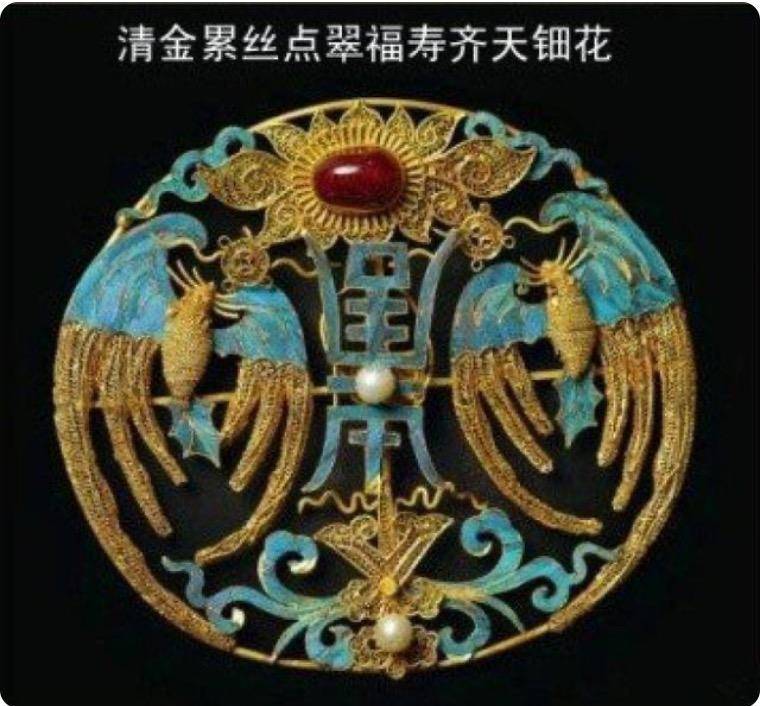
The term diàn, especially in the form of huadian, can refer to floral ornaments made from gold, kingfisher-blue material, or jewels. In another common interpretation, it refers to a small decorative motif placed on the forehead.
These ornaments could take many shapes, including fan-like, petal-like, peach-shaped, or abstract designs. They were often carefully arranged for balance and visual harmony.
Strictly speaking, this category is not always a hair pin in the narrow sense. Still, it belongs to the larger visual language of ancient Chinese feminine adornment.
8. Shubi (梳篦): combs and fine combs
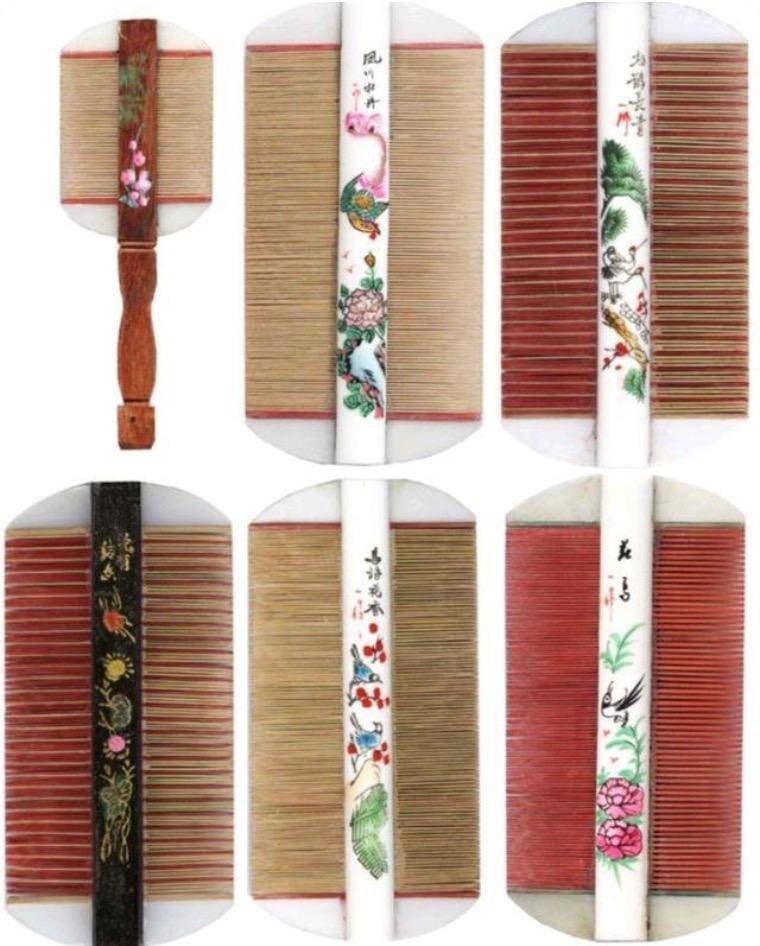
Shubi refers to combs, including both wider and finer forms used in dressing and decorating the hair.
Unlike a zan or chai, a comb is not always described as a pin. But in historical styling, combs could be highly ornamental and form a visible part of a completed hairstyle. They helped shape, smooth, and embellish the hair, especially in more formal arrangements.
That is why they are often listed alongside the classic ancient hair ornaments.
The evolution from ji to zan
One of the most interesting parts of Chinese hair pin history is the shift from ji to zan.
In early periods, ji was the more common word. It appears in earlier Chinese usage and is closely tied to ancient ritual and social customs. As time went on, zan became increasingly common, especially during the Han, Wei, Jin, and Six Dynasties periods. From the Sui and Tang onward, zan gradually took over as the standard term and remained the familiar word in later history.
This change tells us something important: Chinese hair pins were not static objects. Their names, forms, materials, and meanings evolved with language, fashion, and society.
Types of Chinese hair pins by material
Another useful way to understand the types of Chinese hair pins is by material rather than by shape. Different materials create different moods, and each one comes with its own history.
Wooden hair pins
Wooden Chinese hair pins are carved or shaped mainly from wood. They tend to feel quiet, natural, and understated. There is a simplicity to wooden hair pins that works beautifully with hanfu and everyday classical styling.
Their charm lies in their restraint. The downside is that wood can be harder to carve into extremely elaborate forms, so designs may be less intricate than metal-based pieces.
Metal hair pins
Metal hair pins are made from gold, silver, copper, or alloy-based materials. Historically, these were among the most common and versatile forms.
They can be minimal and elegant, or highly decorative with filigree, floral plates, dangling chains, and gemstone settings. Metal offers more structural flexibility, which is why it appears so often in elaborate traditional designs.
The tradeoff is that some metals can tarnish or oxidize over time, so care matters.
Glass hair pins
Glass hair pins have a bright, translucent beauty. They can feel cool, clear, and delicate, with a refined visual lightness that suits more ethereal styling.
They are lovely, but fragile. If you collect or wear them, careful storage is essential.
Ronghua floral ornaments
Ronghua is a traditional decorative craft with a long history, especially prominent in later periods. These ornaments imitate real flowers and were used as hair adornments.
They became popular partly because they were durable, affordable, and easier to preserve than fresh flowers. The name also carries an auspicious sound associated with prosperity and splendor.
In modern discussions of traditional Chinese accessories, ronghua often appears again because it connects craftsmanship, symbolism, and heritage in a very direct way.
Acrylic hair pins
Acrylic is a modern material, of course, but it has become common in contemporary Chinese-style hair accessories. It is easy to dye, shape, and preserve, and it can imitate the transparency of older materials while being more practical for everyday wear.
For shoppers today, acrylic hair pins are often one of the most accessible entry points into Chinese-inspired styling.
Kingfisher-blue ornamentation and modern alternatives
The traditional diancui technique used brilliant blue feather material to decorate jewelry and ornaments, producing an unforgettable color effect. Historically, this craft played an important decorative role in luxury pieces.
Today, modern makers often use substitute materials such as dyed feathers, silk, or ribbon to recreate the look in a more ethical and sustainable way. That allows the visual style and technique to continue without relying on historical practices involving kingfisher feathers.
How to tell different Chinese hair pins apart
If you are new to this world, here is a simple way to keep the main types straight:
- Ji: an early hair pin, historically important and tied to coming-of-age ritual
- Zan: the classic single hair pin used to fasten hair
- Chai: a double-pronged or paired hair pin form
- Buyao: a hair ornament with dangling parts that sway when walking
- Fengguan: a ceremonial phoenix crown
- Huasheng: a floral decorative head ornament
- Diàn / Huadian: decorative floral or forehead ornament
- Shubi: combs used in dressing and decorating the hair
Once you see them side by side, the differences become much easier to remember.
Why Chinese hair pins still feel special today
Part of the appeal is visual, of course. Chinese hair pins are graceful, detailed, and instantly atmospheric. But I think the deeper reason is that they carry layers of meaning.
A single ornament can connect hairstyle, craftsmanship, literature, ritual, identity, and personal style. Some pieces are quiet and practical. Others are ceremonial and dazzling. Together, they reflect a long tradition in which beauty was never separated entirely from symbolism.
That is probably why so many people who start out searching for the types of Chinese hair pins end up interested in much more than accessories. They begin to see a whole aesthetic world behind them.
Final thoughts on the types of Chinese hair pins
If you are just starting to explore traditional Chinese hair ornaments, begin with the basics: ji, zan, chai, and buyao. These four forms give you a strong foundation for understanding both history and style.
From there, broader ornaments like fengguan, huasheng, diàn, and shubi add context and richness. They show that ancient Chinese hair adornment was never limited to one category. It was an entire visual language, refined over centuries.
And honestly, that is what makes it so fascinating. Chinese hair pins are not only beautiful objects. They are small pieces of cultural memory, still catching the light.
FAQ
What is the difference between ji and zan?
Ji is the earlier historical term and was widely used in ancient periods, especially before the rise of zan. Zan later became the more common word for a hair pin used to secure the hair. In simple terms, zan developed from ji and gradually replaced it in common usage.
Is a chai the same as a zan?
Not exactly. A zan is usually a single-pin form, while a chai is typically a double-pronged or paired form. They are related, but not identical.
What makes buyao special?
A buyao is designed with dangling parts that sway as the wearer walks. That movement is actually part of its identity, which is why it feels more lively and dramatic than a plain hair pin.
Are all ancient Chinese hair ornaments considered hair pins?
No. Some are true hair pins used to fasten the hair, such as ji, zan, and chai. Others, like fengguan or certain forms of huadian, are better understood as broader head ornaments or ceremonial adornments.
What materials were traditional Chinese hair pins made from?
Traditional Chinese hair pins could be made from wood, bamboo, gold, silver, copper, jade, ceramic, tortoiseshell, glass, and other materials depending on the period and purpose.
Are Chinese hair pins still worn today?
Yes. Today they are popular in hanfu styling, bridal looks, period-inspired fashion, stage costume, and everyday wear for people who love traditional aesthetics. Modern versions are also made in more practical materials such as alloy and acrylic.