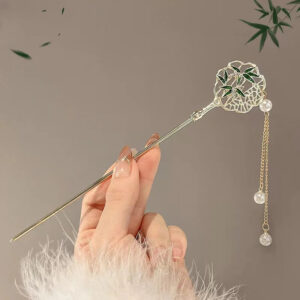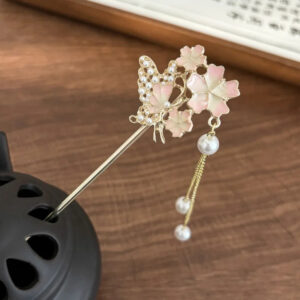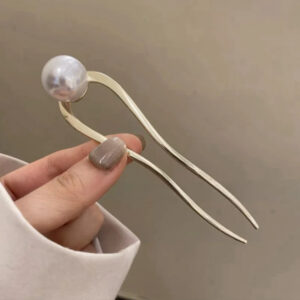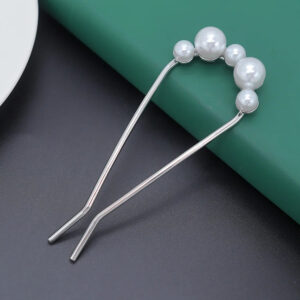
How to Use Bobby Pins with Chinese Hair Pins for More Secure Hairstyles
Chinese hair pins and hair sticks are beautiful accessories that can transform a simple bun or updo into an elegant hairstyle. However, many beginners discover that using only a hair stick can sometimes feel difficult, especially with fine, slippery, layered, or shorter hair.
A simple solution is combining a traditional Chinese hair pin with small supporting accessories such as bobby pins. This technique keeps the decorative hair accessory as the focus while adding extra stability where your hairstyle needs it most.
The goal is not to hide your hair pin with many extra tools. Instead, bobby pins work quietly underneath the hairstyle, helping create a stronger foundation so the Chinese hair pin can hold the shape comfortably.
Why Combine Bobby Pins with Chinese Hair Pins?
Traditional Chinese hair accessories such as hair sticks and decorative hair pins are designed to secure wrapped or twisted hair by using the structure of the hairstyle itself. Many classic styles rely on carefully arranged sections of hair that support each other.
For beginners, the challenge is usually not the hair pin itself. The difficulty comes from creating enough tension and structure before inserting the pin. Hair that is very smooth, freshly washed, thin, or naturally slippery may not provide enough grip for a single hair stick.
Bobby pins can help in several situations:
- Holding loose side sections before inserting a decorative hair pin.
- Supporting a bun that feels too heavy for one hair stick.
- Keeping shorter layers from falling out.
- Creating a stable base for special occasion hairstyles.
Choosing the Right Bobby Pins and Chinese Hair Pins
Not every hairstyle requires the same type of support. The best combination depends on your hair length, thickness, and the hairstyle you want to create.
For Fine or Slippery Hair
Choose lightweight bobby pins with a strong grip. Smaller pins are often easier to hide because they can secure small sections without creating visible bumps.
For Thick or Heavy Hair
You may need several bobby pins placed strategically around the base of the bun. A stronger Chinese hair stick or longer hair pin can then be used as the decorative finishing piece.
For Traditional-Inspired Hairstyles
A simple wooden hair stick, floral hair pin, jade-style hair pin, or handcrafted Chinese hair accessory can work beautifully when paired with hidden support. Traditional hair pins such as zan (簪) styles are often decorative as well as functional, making them suitable for elegant updos.
Step-by-Step: How to Use Bobby Pins with a Chinese Hair Pin
Step 1: Prepare Your Hair
Start with hair that has some natural texture. Extremely clean, silky hair can sometimes be harder to style because it does not hold twists and buns easily.
You can gently brush your hair to remove tangles, but avoid making it completely flat and slippery.
Step 2: Create the Base Hairstyle
Gather your hair into the style you want, such as a low bun, twisted bun, or half-up style.
Before adding the Chinese hair pin, adjust the shape with your hands. The hairstyle should already look close to the final shape before you secure it.
Step 3: Add Hidden Bobby Pin Support
Insert bobby pins around areas that feel unstable.
For example:
- Place one or two pins at the bottom of a bun to prevent it from dropping.
- Secure loose side sections near the twist.
- Cross two bobby pins together when a section needs stronger support.
Try to insert the pins into the inner structure of the hairstyle rather than placing them only on the surface.
Step 4: Insert the Chinese Hair Pin
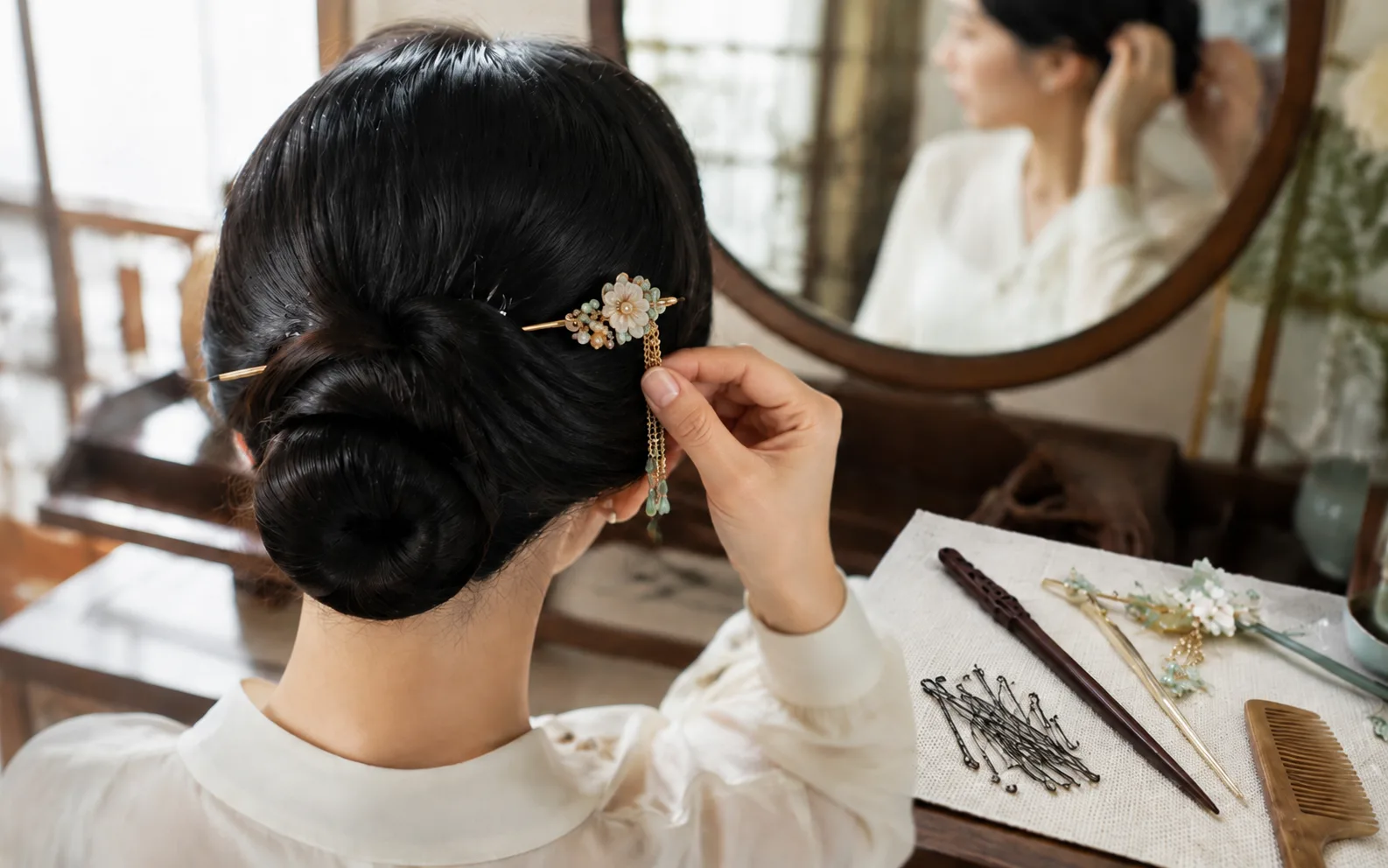
Once the hairstyle feels stable, insert the Chinese hair pin through the bun or twist.
A common beginner mistake is pushing the hair pin straight through without catching enough hair. Instead, angle the pin slightly so it passes through different layers of hair.
This allows the hair pin to anchor the hairstyle instead of simply sitting inside the bun.
Step 5: Adjust the Final Shape
After inserting the hair pin, gently pull or adjust small sections of hair until the hairstyle looks balanced.
If a few strands fall loose, do not immediately remove the entire style. Add a small bobby pin where needed and keep the decorative hair pin in place.
Three Hairstyles That Work Well with This Technique
1. Classic Twisted Bun
A twisted bun is one of the easiest styles for combining bobby pins and Chinese hair pins. Use bobby pins to secure the bottom and sides of the bun, then add a decorative hair stick through the center.
2. Half-Up Chinese Hair Pin Style
For medium-length hair, a half-up style can be easier than a full bun. Bobby pins help hold the upper section while a Chinese hair pin adds the traditional decorative element.
3. Formal Updo with Decorative Hair Accessories
For weddings, cultural events, photography sessions, or special occasions, extra support can make the hairstyle more reliable. Hidden bobby pins allow you to use larger decorative accessories without depending on one pin alone.
Common Mistakes Beginners Make
Using Too Much Hair at Once
Trying to force a large amount of hair through one hair stick often causes the hairstyle to loosen. Build the structure gradually instead.
Placing Bobby Pins Only on the Outside
Visible bobby pins may not provide enough support. They work best when they connect different sections inside the hairstyle.
Making the Hairstyle Too Tight
A secure hairstyle does not need excessive tension. A balanced combination of support pins and a properly inserted Chinese hair pin is usually more comfortable and natural.
Final Thoughts
Using bobby pins with Chinese hair pins is a practical technique that helps beginners enjoy traditional-inspired hairstyles without worrying about the style falling apart.
The Chinese hair pin remains the visual centerpiece, while the bobby pins provide the hidden structure underneath. With a little practice, this combination makes it easier to create elegant buns, twists, and half-up hairstyles for everyday wear or special occasions.