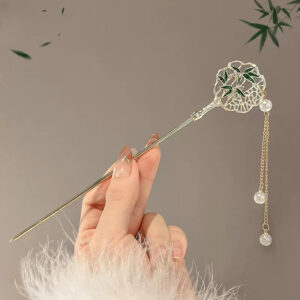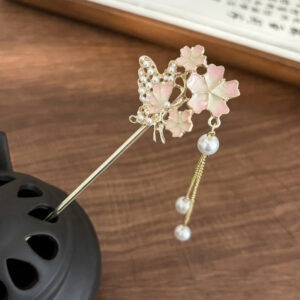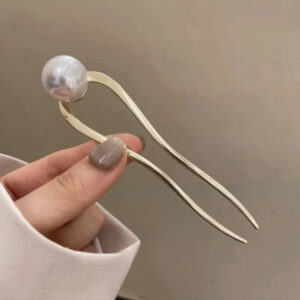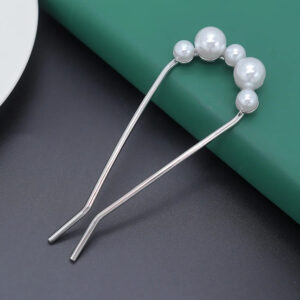
To keep hair accessories secure in silky hair, add a little texture where the accessory will sit, choose a clip that fits the amount of hair you’re holding, and give it a stable section to grip. A hidden bobby pin or small elastic can provide extra support when needed. The goal is to stop slipping without pulling your hair too tightly.
Whether you’re wearing a simple barrette, a decorative hair comb, or a traditional Chinese hairpin, the best approach depends on how the accessory is meant to hold your hairstyle.
Why Do Hair Accessories Slip Out of Silky Hair?
Silky hair can look perfectly styled when you leave the house, only for a clip to slide down an hour later.
This often happens because smooth hair offers relatively little resistance against the accessory. A clip might close firmly, but that doesn’t necessarily mean it has enough grip to stay where you placed it.
Several factors can make slipping more likely:
- Smooth strands: Straight, silky hair may slide easily against polished metal or plastic.
- Freshly conditioned hair: Smoothing products can make the area around a clip particularly slippery.
- Poor accessory fit: A large barrette may not close snugly around a small section of hair.
- Excessive weight: Heavy ornaments can gradually pull a hairstyle downward.
- Weak anchoring: An accessory placed only through the outer layer of a hairstyle may have little structural support.
Silky hair and fine hair are not the same thing. Fine hair describes the diameter of individual strands, while silky describes how hair feels and behaves. You can have thick, dense hair that is remarkably smooth.
That distinction matters when choosing an accessory. Fine hair often needs a smaller grip, while dense but silky hair may need a stronger clip with more holding capacity.
Start by Identifying Why Your Accessory Slips
Before buying another hair clip, look at what actually happens when the one you’re wearing comes loose.
| What happens | Likely issue | What to try |
|---|---|---|
| The clip slowly slides downward | Too little grip or too much weight | Add localized texture and try a lighter clip |
| A barrette moves but stays closed | The clasp is too large for the hair section | Use a smaller barrette or a hidden anchor |
| A claw clip twists sideways | Hair is unevenly distributed | Reposition the clip around a balanced twist |
| Bobby pins work loose | Poor placement or too much hair in one pin | Use smaller sections and crossed pins |
| A decorative comb falls backward | Its teeth are not anchored | Insert it into a prepared twist or braid |
| A hair stick slides out of a bun | The stick missed the supporting hair underneath | Reinsert it through the bun and scalp-level hair |
Different problems require different fixes. Adding more hairspray won’t necessarily help if the accessory itself is the wrong size.
1. Add Texture Only Where You Need Grip
You don’t have to make your entire hairstyle feel rough to prevent slipping.
Start by identifying the small section of hair that will support your accessory.
A light application of dry shampoo, texturizing spray, or styling powder can help create grip around that area. Use only enough to change how the hair feels slightly.
For example, if you’re placing a decorative clip just above your ear, apply a little product to the hair underneath the clip rather than spraying your entire head.
Allow any damp styling product to dry before inserting the accessory.
Avoid applying heavy oils, smoothing serums, or leave-in conditioners directly to the section you plan to secure. Those products can be useful elsewhere in your hair, but they may make the attachment point more slippery.
What if you don’t want to use styling products?
Try a small twist or braid underneath the accessory. This creates a more substantial anchor without relying on product buildup.
2. Match the Accessory to the Amount of Hair
A common mistake is assuming that a stronger or larger clip will always provide better hold.
It won’t.
A large claw clip can close almost completely around a small amount of fine hair without gripping it securely. Meanwhile, a tiny clip may struggle to contain a thick section of silky hair.
The accessory needs to fit both your hair volume and the hairstyle you’re creating.
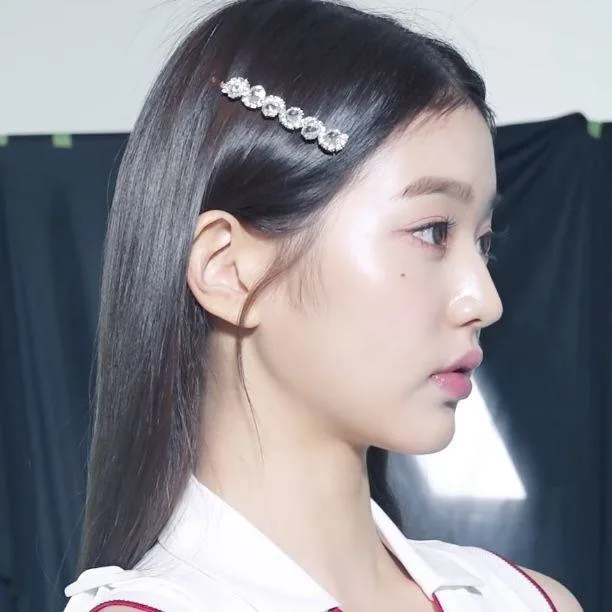
For a small side section, try a lightweight barrette or mini clip with a snug closure.
For a half-up hairstyle, choose a medium clip that closes comfortably around the gathered hair.
For a full twist or bun, look for an accessory with enough length, tooth depth, or structural support to hold the entire section.
Silicone-lined clips and designs with textured gripping surfaces may help when ordinary smooth clips continually slide.
Check the accessory’s edges, too. A clip that grips securely but catches or scrapes your hair is not a good solution.
3. Create a Hidden Anchor for Decorative Hair Clips
Some decorative accessories look beautiful but aren’t particularly effective at holding slippery hair on their own.
A hidden anchor lets you keep wearing them without depending on their clasp for all the support.
Try this method:
- Gather the section of hair you want to decorate.
- Make a small twist near the point where the accessory will sit.
- Secure the twist with a bobby pin or a small snag-free elastic.
- Place the decorative accessory over the secured section.
- Check that the ornament rests against the hairstyle without pulling it downward.
This technique is especially useful for pearl barrettes, floral hair clips, and heavier ornamental pieces.
It also works well when you want a smooth, polished finish but don’t want to apply much styling product.
The visible accessory provides the decoration, while the hidden anchor supports the hairstyle.
4. Use Bobby Pins More Effectively
Bobby pins can be surprisingly useful for slippery hair, but placement matters more than simply adding more of them.
Start with a small section rather than trying to force too much hair between the pin’s prongs.
Slide the pin close to the head and catch a little hair from the underlying section so it connects the loose hair to a stable base.
For extra support, place a second bobby pin across the first to create an X-shaped anchor.
The two pins help resist movement in different directions.
You can also lightly mist the hair at the anchor point with a suitable styling product before inserting the pins.
For decorative Chinese hairpin styles, hidden bobby pins are particularly useful around the base of a bun or where shorter layers tend to escape.
Our guide to using bobby pins with Chinese hair pins explains how to combine the two without making the support pins the focus of the hairstyle.
5. Keep Claw Clips From Sliding Down
Claw clips work differently from flat barrettes. Their teeth and spring hold a gathered section of hair, so the shape of that section is important.
Instead of clipping completely loose hair, gather it into a twist first.
For a simple everyday style:
- Gather your hair at the back of your head.
- Twist it upward while keeping the base comfortably firm.
- Fold or tuck any excess length according to your clip size.
- Position the claw clip so its teeth catch both the twisted section and some hair close to the head.
- Release your hand and check whether the twist remains balanced.
If the clip immediately tilts or moves downward, try a different size or reduce the amount of hair held by the clip.
A half-up claw clip can be easier to manage than a full updo when the hair is especially smooth.
Avoid solving the problem by pulling the twist painfully tight. The clip should support the hairstyle, not depend on excessive tension.
6. Secure Decorative Hair Combs in Silky Hair
Decorative combs often need a more structured base than barrettes because their teeth must stay embedded in the hairstyle.
Sliding a comb straight into loose, smooth hair may look attractive initially, but it can leave the comb with very little resistance against movement.
Instead, prepare a small twist or braid underneath the area where the comb will sit.
Insert the teeth toward the supporting section rather than simply pushing the comb into the outer surface.
For a formal updo, a few concealed bobby pins can help keep the base stable.
Pay attention to the comb’s weight and size. A large decorative comb may need a more substantial hairstyle than a small side twist can provide.
If the teeth scratch your scalp or snag strands as you insert the comb, remove it and adjust the angle.
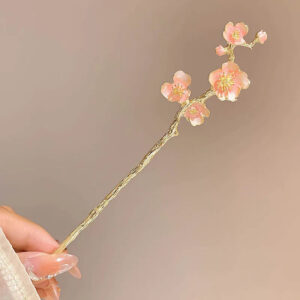
7. Keep Chinese Hairpins Secure Without Losing Their Elegance
Traditional Chinese hairpins and hair sticks bring another consideration into the picture: many are designed to work with the structure of a bun or twist rather than simply clamping down on a section of hair.
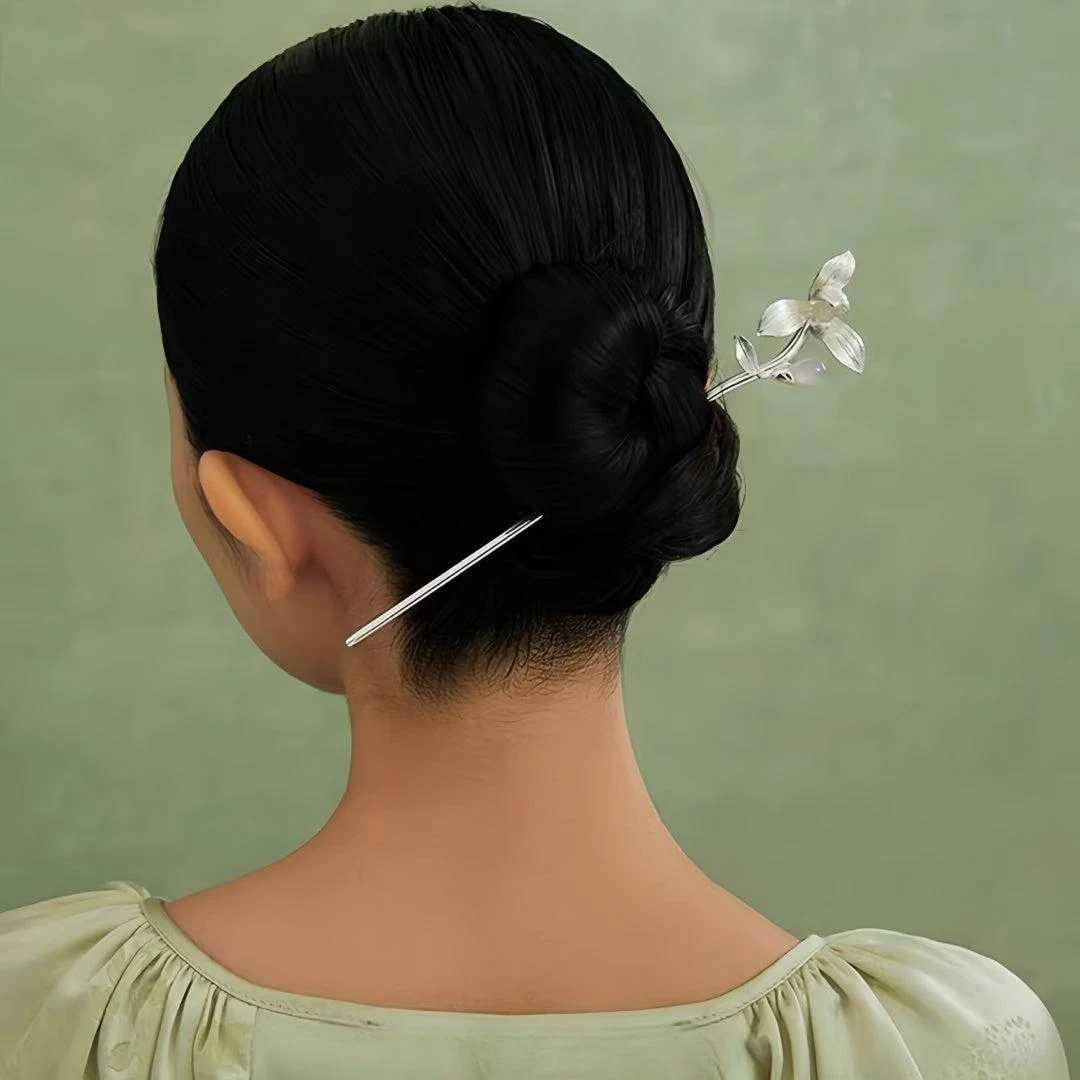
A Chinese hair stick can hold a hairstyle when it passes through the bun and catches some of the hair close to the scalp underneath.
If it passes only through the outside of the bun, it may slip out even when the hairstyle looks reasonably tight.
Silky hair can make this more noticeable because the wrapped sections may loosen as you move.
For a lightweight everyday hair stick, focus on creating a compact, comfortable bun and anchoring the stick correctly.
If you’re just starting out, our guide to using hair sticks in fine, slippery hair covers the preparation and hairstyle adjustments in more detail.
For an existing bun that repeatedly loses its stick, see how to keep a hair stick from falling out.
What About Decorative Chinese Hairpins With Tassels?
Hairpins with large floral ornaments, beads, or dangling tassels can be heavier at one end.
Their decorative weight may affect how the hairstyle balances, particularly if the bun is small or loosely arranged.
For these pieces, consider securing the hairstyle with a simpler supporting accessory first.
A decorative hairpin can then be added where its ornament sits comfortably and its weight is supported by the underlying hairstyle.
This approach is useful for Hanfu-inspired hairstyles and formal updos where the ornamental detail is the main visual feature.
Be careful with hairspray around delicate decorations, painted finishes, and tassels. Apply styling products to your hair rather than directly to the ornament.
How to Choose Accessories for Different Types of Silky Hair
| Hair type | Accessories worth trying | Helpful technique |
|---|---|---|
| Fine, straight, silky hair | Mini barrettes, lightweight clips, small bobby pins | Localized texture and smaller sections |
| Thick, straight, silky hair | Stronger claw clips, larger combs, suitable hair sticks | Structured twists and balanced placement |
| Long, silky hair | Hair sticks, hair forks, properly sized claw clips | Secure the hairstyle’s base |
| Short, silky hair | Small snap clips, side barrettes, mini claws | Small twists and lightweight designs |
| Silky hair with layers | Bobby pins, small clips, decorative barrettes | Secure shorter sections separately |
There isn’t one accessory that works perfectly for everyone.
A useful test is whether the piece can hold your intended style comfortably during ordinary movement, without catching strands or pulling at the scalp.
Mistakes That Make Hair Accessories Less Secure
Adding too much product
Texture can help, but heavy buildup may leave the hair stiff or difficult to restyle. Begin with a small amount and add more only if necessary.
Using a heavy ornament on a loose section
An accessory may be too heavy for the hairstyle supporting it. Try a lighter design or reinforce the base.
Clipping only the outer layer
Decorative accessories often need to connect to a more stable section underneath the visible hair.
Assuming tighter always means better
A painfully tight hairstyle is not a secure long-term solution. Repeated pulling can damage hair and contribute to traction-related hair loss.
Ignoring a damaged clasp
A clip with weakened spring tension, bent teeth, or a loose closure may continue slipping regardless of your styling technique.
Replace or repair the accessory rather than repeatedly forcing it to grip.
A Quick Test Before Leaving the House
Once you’ve placed your accessories, give the hairstyle a simple check.
Stand normally and release your hands completely. Turn your head gently from side to side, then look down and back up.
If the accessory moves, identify whether the hairstyle itself is loosening or the accessory is sliding over otherwise stable hair.
Rebuilding the anchor or changing the clip size is usually more useful than repeatedly tightening the same accessory.
A comfortable hairstyle should remain secure through your normal movements without creating soreness or noticeable pulling.
Frequently Asked Questions
How do I stop hair clips from slipping out of silky hair?
Apply a small amount of texturizing product where the clip will sit, use a clip sized for your hair section, and try a concealed bobby pin or twist underneath if additional support is needed.
Are hair sticks suitable for silky hair?
Yes. Hair sticks can work in silky hair when the hairstyle has enough structure and the stick catches supporting hair underneath the bun. Size, weight, placement, and hair volume all affect the result.
Can I keep hair accessories secure without hairspray?
Yes. Small braids, twists, hidden bobby pins, and properly sized clips can provide hold without hairspray. A structured hairstyle can be more effective than relying on styling products alone.
Why do my hair accessories slide out after washing my hair?
Freshly washed and conditioned hair can feel particularly smooth, especially if you’ve used smoothing treatments or leave-in products. Adding localized texture or creating a supporting twist can make accessories easier to secure.
Can tight hair clips damage your hair?
Accessories that repeatedly pull, snag, or place excessive tension on the hair can contribute to damage. If a style hurts or pulls noticeably at your scalp, loosen it and change the placement or accessory.