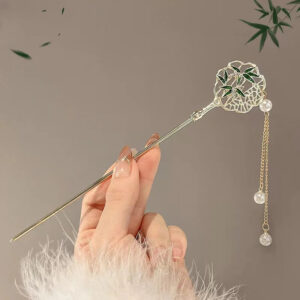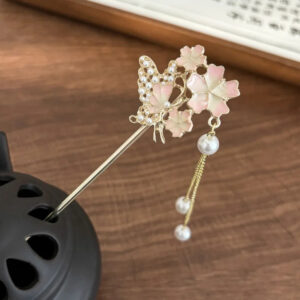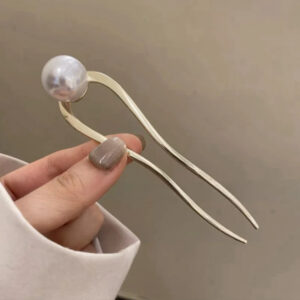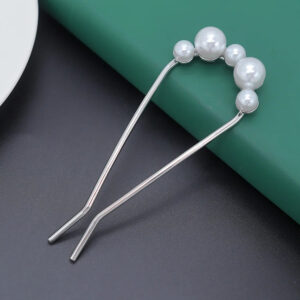
Chinese hair pin hairstyles for thin hair work best when you use a smaller amount of hair, create gentle texture before styling, and choose a lightweight accessory rather than a large ornamental pin. Half-up twists, compact low buns, braided sections, and softly folded styles usually provide more reliable hold than oversized or tightly pulled updos.
The goal is not to force thin hair into a large, elaborate shape. It is to build a balanced hairstyle that feels secure, looks intentional, and remains comfortable throughout the day. With the right preparation, a Chinese hair pin can become the visible finishing detail while an elastic, small grip, or discreet bobby pin provides additional support when needed.
The core keyword and article direction were provided in the uploaded brief.
Thin Hair and Fine Hair Are Not Exactly the Same
The terms “thin hair” and “fine hair” are often used interchangeably, but they describe different characteristics. Fine hair refers to the diameter of each individual strand, while thin hair usually refers to lower overall hair density. A person can have many fine strands, fewer medium-width strands, or a combination of fine texture and low density.
This distinction matters when choosing a hairstyle.
Fine strands may feel silky and slip out of smooth metal accessories. Lower-density hair may form a smaller bun and reveal more scalp if it is pulled too tightly. Hair that is both fine and thin may need extra texture, a smaller pin, and hidden structural support.
The styling principles in this guide are useful for all three situations:
- Use smaller sections instead of trying to create a large bun.
- Add grip before inserting the pin.
- Choose lightweight ornaments.
- Keep the hairstyle soft rather than severely pulled back.
- Allow supporting tools to do part of the holding.
Why Chinese Hair Pins Can Be Difficult to Use in Thin Hair
A traditional pin or modern Chinese-style hair stick holds by passing through a twist, catching a small amount of hair close to the head, and returning through the twist. It needs enough friction and structure to remain in place.
Thin hair presents three common challenges.
First, a small bun may not contain enough hair for a long pin to anchor securely. Second, silky strands can slide along a highly polished surface. Third, a heavy ornament can rotate, droop, or pull the entire hairstyle downward.
This does not mean Chinese hair pins are unsuitable for thin hair. It means the pin must be matched to the scale of the hairstyle.
A compact wooden stick, narrow metal pin, small floral ornament, or short two-pronged piece is often more manageable than a long pin with multiple chains, stones, and dangling decorations. Readers unfamiliar with the main accessory forms can review this guide to the types of Chinese hair pins.
Modern shops may use terms such as hair pin, hair stick, zan, and hair fork somewhat loosely. Historically, zan (簪, zān) commonly refers to a pin-like ornament used to secure or decorate arranged hair, although terminology and construction varied across time and place. Modern Chinese-inspired pieces should not automatically be treated as exact reproductions of historical objects.
How to Prepare Thin Hair Before Using a Hair Pin
Preparation has more influence on hold than ornament size.
Avoid styling extremely slippery hair
Freshly conditioned hair may be difficult to secure because the strands separate and slide easily. You do not need dirty or stiff hair, but a little texture can make the twist more stable.
Depending on your hair and scalp, you can use:
- A small amount of dry texture spray
- Light mousse applied before drying
- A little dry shampoo near the roots
- Soft waves created with heatless rollers
- A loose braid worn briefly and then released
- Gentle backcombing inside the section that will become the bun
Do not coat the full length with heavy product. Too much spray or wax may cause thin strands to clump together, making the hairstyle look smaller.
Build the hairstyle before adding the ornament
A decorative Chinese hair pin does not always need to be the only structural tool.
For thin hair, it is often more practical to secure the basic shape with a small clear elastic, spiral pin, mini claw clip, or two crossed bobby pins. The visible hair pin can then pass through the completed style without carrying all its weight.
This approach is especially useful for bridal hairstyles, long events, dancing, photography, or any occasion when you do not want to keep adjusting the accessory.
Keep the bun proportional
Trying to spread a small amount of hair over a very large area can expose gaps and make the pin unstable. A compact bun generally looks fuller and more deliberate than a wide, flat bun.
Place the hairstyle where your hair naturally has enough density. A low bun at the nape or a small half-up bun below the crown often works better than a high topknot.
The Best Chinese Hair Pin Hairstyles for Thin Hair
1. Half-Up Twist with a Lightweight Pin
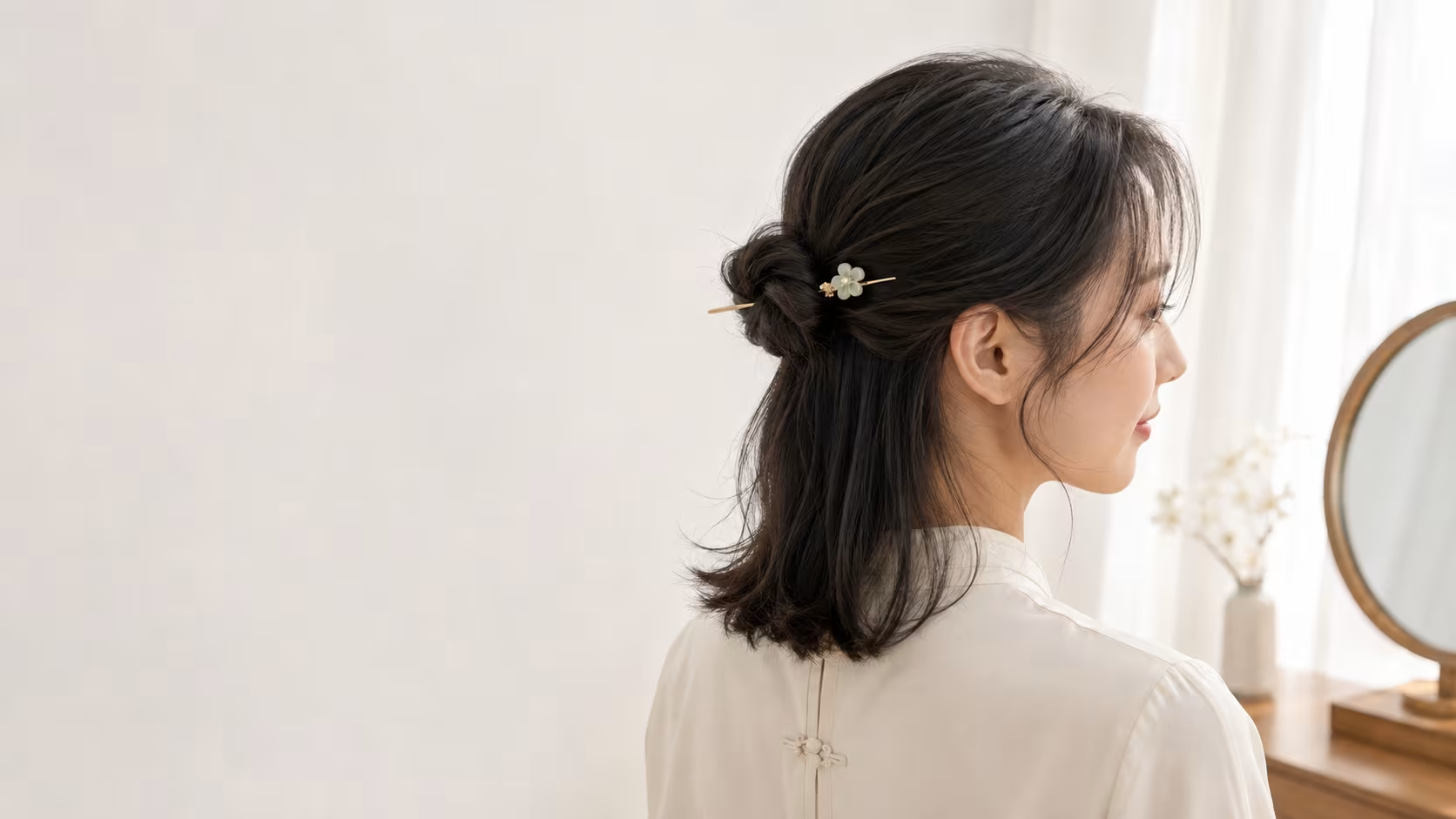
The half-up twist is one of the easiest Chinese hair pin hairstyles for thin hair because it uses only the upper section. The loose hair underneath creates visual fullness, while the pin decorates a much smaller and easier-to-control twist.
How to create it
- Take a section from each side of the head, beginning above the ears.
- Bring the sections together at the back.
- Twist them once or twice without pulling tightly.
- Hold the twist against the head.
- Insert a small hair pin diagonally through the outer edge.
- Catch a little hair close to the scalp.
- Turn the pin back through the center of the twist.
For additional security, join the two sections with a clear elastic before twisting them. Position the elastic beneath the fold so it remains hidden.
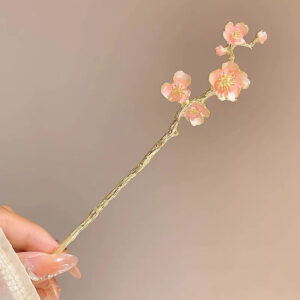
A narrow floral pin works particularly well because the ornament can be visible without overpowering the small hairstyle. The site’s guide to floral Chinese hair pins provides additional ideas for coordinating flower size and hairstyle scale.
Best for: shoulder-length to long hair
Recommended accessory: small floral pin, narrow zan-style pin, short wooden stick
2. Braided Half-Up Mini Bun
A braid groups fine strands together and creates surface detail, helping a small bun look more substantial.
How to create it
- Take the upper third of the hair.
- Secure it loosely with a small elastic.
- Make a simple three-strand braid.
- Gently widen the braid by pulling only its outer edges.
- Coil it into a compact bun.
- Anchor the bun with one or two bobby pins.
- Slide a lightweight Chinese hair pin through the bun as the finishing ornament.
Do not pull the braid apart so far that individual sections separate. The objective is slight expansion, not an oversized, unstable bun.
This style works well with hanfu-inspired outfits because the braid adds structure without requiring elaborate padding or multiple ornaments. For additional beginner combinations, see the site’s hanfu hairstyles for beginners.
Best for: medium-length or long hair
Recommended accessory: short metal pin, small blossom pin, slim decorative stick
3. Compact Low Rope-Twist Bun
A rope twist is useful when an ordinary coil falls apart too quickly.
How to create it
- Gather the hair at the nape without pulling tightly.
- Divide it into two sections.
- Twist each section in the same direction.
- Wrap the two sections around each other in the opposite direction.
- Coil the rope into a small bun.
- Tuck the ends underneath.
- Secure the base with a small elastic or two bobby pins.
- Insert the Chinese hair pin through the upper third of the bun.
The rope structure keeps the strands grouped and adds definition around the edge. Positioning the bun at the nape also reduces the distance from the hairstyle to the scalp, allowing a shorter pin to anchor more easily.
Best for: medium to long hair
Recommended accessory: lightweight wooden pin, narrow matte metal stick
4. Low Looped Bun with a Hidden Elastic
This style gives the impression of a soft bun without requiring enough hair for a complete coil.
How to create it
- Make a low ponytail with a small elastic.
- On the final pass through the elastic, pull the hair only halfway through.
- Leave a small loop and allow the ends to remain underneath.
- Gently widen the loop from side to side.
- Wrap the loose ends around the elastic if the hair is long enough.
- Secure the ends beneath the loop.
- Pass a decorative pin horizontally or diagonally across the top.
The elastic provides the real hold. The Chinese hair pin adds a refined line and helps control the upper surface of the loop.
This is a practical option for thin hair because it does not depend on a dense coil. It also works with hair that is not long enough for a traditional wrapped bun.
Best for: shoulder-length to medium-long hair
Recommended accessory: short hair stick, two-pronged pin, compact floral ornament
5. Side Twist with a Decorative Chinese Hair Pin
A side twist is suitable for thin hair that cannot form a stable bun. It treats the hair pin primarily as an ornament while still using it to control a small section.
How to create it
- Choose the side on which you want the ornament to appear.
- Take a section above the ear.
- Twist it backward loosely.
- Add one or two small sections as you continue toward the back.
- Secure the twist with crossed bobby pins.
- Slide a small Chinese hair pin over or just above the hidden pins.
The bobby pins should form the foundation. Do not rely on a long single-pronged pin to hold a very shallow side section by itself.
This hairstyle looks balanced with a small flower, leaf, butterfly, or pearl detail. Avoid a long tassel near the face unless the piece is exceptionally light and the hairstyle has been tested for comfort.
Best for: short to long hair
Recommended accessory: small floral pin, compact decorative chai-inspired piece
6. Soft Folded Twist
The folded twist creates a vertical silhouette without needing the volume of a French twist.
How to create it
- Gather the hair into a low ponytail shape without tightening it.
- Twist the length upward.
- Fold the remaining hair downward beside the twist.
- Tuck the ends under the folded section.
- Hold the shape with several discreet bobby pins.
- Insert a Chinese hair pin diagonally across the fold.
For a fuller appearance, place a very small piece of lightweight hair padding inside the fold. The padding should match the hair color and remain completely covered. Do not use a large form that creates an unnatural gap between the hairstyle and the head.
A pin with a modest decorative end suits this shape better than an ornament extending far beyond the twist.
Best for: medium to long hair
Recommended accessory: slim metal zan-style pin, small jade-look ornament, narrow wooden stick
7. Small Textured Bun with a Decorative Pin
This is the closest option to a classic hair-pin bun, but the scale should remain compact.
How to create it
- Add soft texture through waves, a light styling product, or a loose braid.
- Gather the hair into a low ponytail.
- Secure it with a small elastic.
- Divide the ponytail into two or three sections.
- Twist each section loosely and place it around the elastic.
- Pin each section separately instead of wrapping the entire ponytail into one coil.
- Insert the decorative hair pin only after the shape is secure.
Pinning several small sections creates more visible dimension than making one tight coil. It also allows you to cover the scalp and elastic more strategically.
For a complete explanation of the locking motion used with stick-shaped accessories, see how to wear a Chinese hair stick properly. Additional everyday variations appear in the site’s broader guide to easy hairstyles with Chinese hair pins.
Best for: medium to long hair
Recommended accessory: lightweight stick, narrow metal pin, restrained floral design
How to Choose a Chinese Hair Pin for Thin Hair
Choose a lighter ornament
Weight matters more than visual size. A large hollow ornament may be manageable, while a smaller solid metal piece may pull noticeably.
Before wearing a new pin for several hours, test it at home. Walk, turn your head, sit against a chair, and check whether the ornament rotates or causes tension.
Look for an appropriate working length
The decorative top does not hold the hairstyle. The usable shaft does.
For a small half-up style or compact low bun, a shorter pin is often easier to balance. A long stick may extend too far beyond the hairstyle and behave like a lever, gradually loosening the bun.
Readers comparing structural accessories can also consult the guide to Chinese hair sticks for buns.
Consider surface texture
Highly polished metal can slide through very smooth hair. Wood, bamboo, matte metal, or subtly textured acetate may provide more friction.
The surface should still be smooth enough not to catch, splinter, or scrape individual strands.
Keep decorative elements close to the shaft
Large flowers, long chains, heavy beads, and extended side branches move the center of gravity away from the hairstyle. Thin hair generally handles compact ornamentation better.
For dangling pieces, choose short and lightweight elements, and position them so they do not repeatedly strike the neck or become caught in earrings or clothing.
Consider two-pronged support
A small two-pronged pin or fork can distribute pressure across a slightly wider area than a single shaft. It may be useful for a looped bun or folded twist.
However, prongs still require enough structured hair to grip. They should not be pushed directly against the scalp or forced through a tight knot.
Common Mistakes to Avoid
Pulling the front hair too tightly
A severe, smooth finish may make a bun appear neater, but it can also flatten the style and expose more scalp. Leave slight softness around the crown and hairline.
Repeatedly wearing hairstyles that pull strongly on the hair can contribute to traction alopecia. The American Academy of Dermatology advises loosening hairstyles that pull and states that pain is a sign that a style is too tight.
Using a heavy pin to create volume
An ornament cannot compensate for insufficient structure. A heavy accessory usually makes a small hairstyle less stable.
Create the desired shape with texture, sectioning, an elastic, padding, or hidden pins. Add the Chinese hair pin afterward.
Forcing the pin through the bun
A hair pin should pass through controlled sections, not through a compact knot. Forcing it may bend the accessory, scrape the scalp, or break strands.
Remove the pin, loosen the bun slightly, and try a shallower angle.
Expecting one pin to hold every hairstyle
A sturdy hair stick may hold some buns independently, but a delicate decorative pin is not necessarily designed as the only fastener.
Using hidden support is not a styling failure. It is often the most secure and comfortable method.
Choosing a historically dramatic style for ordinary wear
Many modern hanfu and Chinese-inspired hairstyles adapt historical visual ideas for photography, festivals, performance, or contemporary fashion. They are not automatically exact reconstructions of hairstyles from a particular dynasty.
For daily styling, a simple pin with a modern blouse, dress, knitwear, or understated hanfu-inspired outfit is usually easier to balance than a large costume-drama arrangement.
Comfort and Hair Safety
A properly placed hair pin should feel stable but not painful.
Remove or reposition the accessory if you notice:
- Pulling at the temples or hairline
- Scalp pain
- Headache developing around the hairstyle
- Repeated snagging
- Broken strands around the pin
- Redness, bumps, or persistent tenderness
- Increasing shedding or visible thinning
Do not sleep, exercise vigorously, drive with a long pin pressing against the headrest, or handle small children while wearing a long, sharp, or heavily dangling accessory.
When thinning is new, worsening, patchy, or accompanied by scalp symptoms, hairstyle changes alone may not address the cause. A dermatologist can evaluate whether the change is related to traction, genetics, inflammation, illness, medication, nutritional factors, or another condition.
FAQ
Can Chinese hair pins hold very thin hair?
Yes, but the hairstyle may need a small elastic, bobby pins, or a compact two-pronged accessory for support. Lightweight pins and half-up styles are generally easier to control than large full buns.
What is the easiest Chinese hair pin hairstyle for thin hair?
A half-up twist is usually the easiest. It uses a small section, leaves the remaining hair loose for fullness, and can be secured with a hidden elastic before adding the decorative pin.
How do I stop a Chinese hair pin from sliding out?
Add light texture, create a tighter internal twist without pulling the scalp, and insert the pin so it catches both the styled section and a small amount of hair near the head. A matte wooden pin may also grip better than highly polished metal.
Should thin hair use a shorter hair pin?
Often, yes. A shorter and lighter pin is easier to balance in a compact bun or half-up style. The ideal length depends on the size of the hairstyle rather than hair length alone.
Can I use a tassel hair pin with thin hair?
You can use a lightweight tassel pin after securing the hairstyle with hidden support. Avoid long, heavy tassels that rotate the pin or pull continuously on one small section.
Are Chinese hair pins suitable for short thin hair?
Short hair may not form a bun, but a small decorative pin can be used over a side twist, braided section, mini half-up loop, or hidden clip. The accessory should be treated mainly as decoration rather than the sole fastener.
Does wearing hair pins cause hair loss?
Occasional, comfortable use is different from repeatedly wearing tight styles. The main concern is persistent pulling, pain, or tension at the same areas of the scalp. Loosen or change any hairstyle that causes discomfort, and seek professional advice for ongoing hair loss.
Conclusion
The most successful Chinese hair pin hairstyles for thin hair are compact, softly textured, and supported where necessary. Begin with a half-up twist, braided mini bun, or low looped bun rather than an oversized updo. Choose a lightweight pin that matches the scale of the hairstyle, and let hidden elastics or bobby pins provide additional structure.
A Chinese hair pin does not need to hold every strand by itself. When the hairstyle and accessory share the work, thin hair can support a refined look without excessive pulling, weight, or complicated construction.