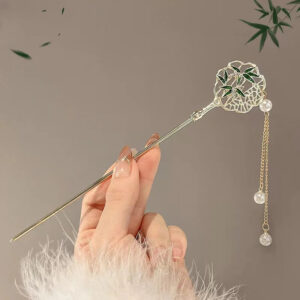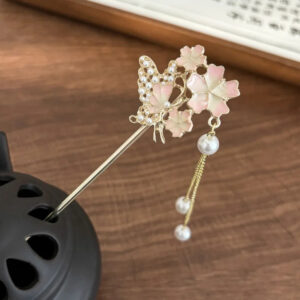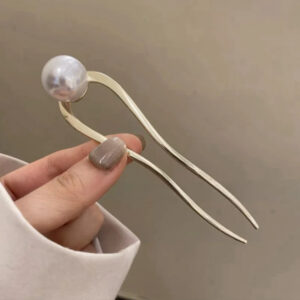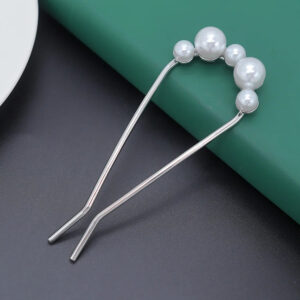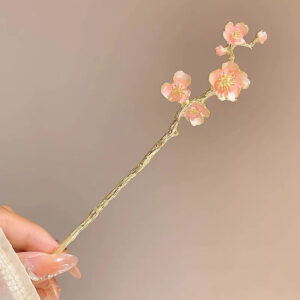
A Chinese hair pin may look delicate at first glance, but it carries a quiet strength. With one slender piece of wood, jade, metal, or enamel, hair can be gathered, lifted, shaped, and transformed. For many modern wearers, Chinese hair pins are admired for their elegance and practicality. They can secure a bun without elastic bands, add refinement to a simple outfit, and bring a graceful traditional accent into everyday styling.
Yet Chinese hair pins are not only fashion accessories. They belong to a much longer story of Chinese dress, beauty, social identity, craftsmanship, and ceremony. In different periods of Chinese history, hair ornaments could express age, status, taste, family background, marital meaning, or aesthetic ideals. Some were simple and functional. Others were made from gold, silver, jade, pearls, kingfisher feathers, or carved decorative motifs.
This guide introduces easy hairstyles with Chinese hair pins for beginners, while also explaining the cultural background behind these beautiful accessories. The goal is not to turn tradition into costume, but to help modern readers understand why a hair pin can feel so elegant, meaningful, and enduring.
What Is a Chinese Hair Pin?
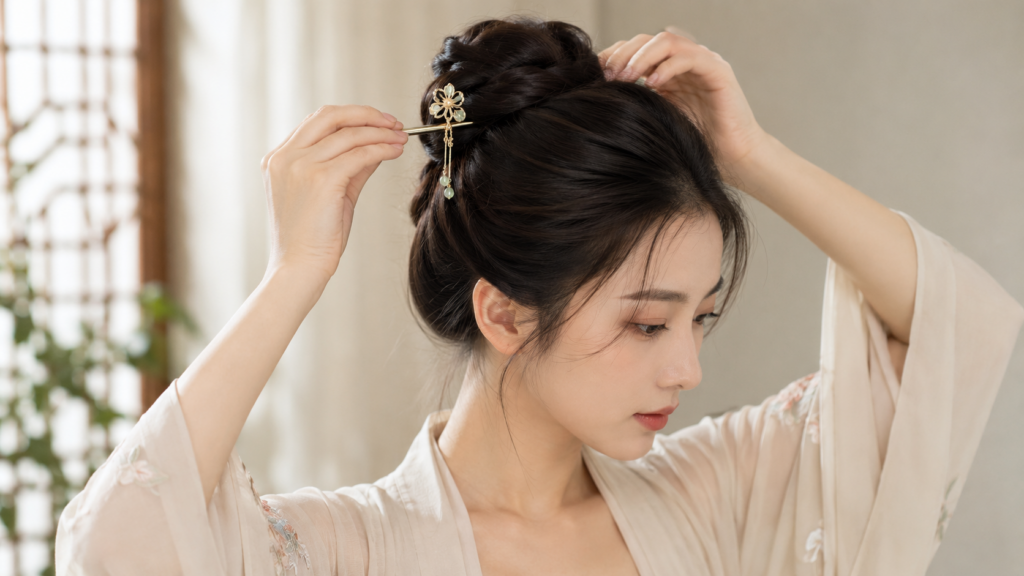
A Chinese hair pin is a hair accessory traditionally used to hold hair in place, especially in buns, coiled styles, and formal updos. In Chinese culture, hair pins are often associated with words such as ji and zan, depending on historical period, form, and usage.
At the most practical level, a hair pin works by passing through a twist of hair and anchoring it against itself. This is why even a single pin can hold a bun when placed correctly. But beyond function, Chinese hair pins often carry decorative elements: carved ends, floral shapes, dangling ornaments, auspicious motifs, beads, enamel, jade, or metalwork.
A simple wooden pin may feel natural and understated. A jade-style pin may suggest refinement and classical beauty. A metal hair pin with dangling chains may create movement when the wearer walks. In traditional settings, the material and design were not random. They could reflect social position, occasion, regional fashion, and personal taste.
A Brief History of Chinese Hair Pins
Chinese hair pins have a very long history. Archaeological and museum collections show that hair pins and hair ornaments appeared in ancient China across different materials, including jade, bone, metal, and later more elaborate precious materials.
In early Chinese society, hair was not treated casually. Hair arrangement was connected with age, propriety, identity, and social order. Men and women both used forms of hair fasteners in ancient times, though women’s decorative hair ornaments became especially rich and varied over the centuries.
During the Han period, hair ornaments became especially important in women’s styling. The zan, a decorated hair pin, was often used to secure arranged hair. Some ornaments included moving decorative parts, such as the buyao, which was designed to tremble or sway gently as the wearer moved. This created an elegant sense of motion and delicacy.
By the Tang dynasty, hair ornaments became more elaborate and visually expressive. Courtly fashion favored height, fullness, decorative richness, and sophisticated ornamentation. Later dynasties continued to develop different forms of hair pins, combs, diadem-like ornaments, and decorative headpieces. In the Ming and Qing periods, hair pins could be highly refined objects made with gold, silver, jade, pearls, enamel, glass, feathers, and intricate metalwork.
This history matters because it shows that Chinese hair pins were never merely “pretty objects.” They were part of a complete visual language of hairstyle, dress, etiquette, occasion, and beauty.
The Cultural Meaning of Hair Pins in Chinese Tradition
Hair, Adulthood, and Ceremony
One of the most meaningful cultural associations of the Chinese hair pin is the traditional hairpin ceremony, often known as ji li. In ancient China, this rite marked a girl’s transition into adulthood. The hair was arranged and secured with a hair pin, symbolizing that the young woman had entered a new stage of life.
Modern readers should understand this ceremony in its historical context. It reflected the social structures, gender expectations, and family systems of its time. Today, many people look back at the ceremony as part of cultural history rather than a rule for modern life.
Still, the symbolism remains powerful. A hair pin was not only a tool for holding hair. It could mark maturity, dignity, and social recognition. The act of putting hair up changed the visual identity of the wearer. Loose or braided hair could suggest youth, while pinned hair could suggest adulthood and composure.
Beauty, Restraint, and Balance
Traditional Chinese aesthetics often value balance, proportion, and harmony. A hair pin fits naturally into this way of seeing beauty. It does not need to overwhelm the face or the hairstyle. A single well-placed pin can create a refined effect.
This is one reason Chinese hair pins remain appealing today. They can look elegant without being loud. They can make a simple bun feel intentional. They can add cultural texture to modern clothing without requiring a fully traditional outfit.
Materials and Social Meaning
The material of a hair pin could also carry meaning. Wood and bone were practical and accessible. Silver and gold suggested wealth or special occasions. Jade was admired for its smoothness, durability, and cultural associations with refinement. Pearls, gemstones, enamel, and featherwork could make a hair ornament more luxurious.
In historical society, such materials often reflected class and status. A wealthy woman might own many ornaments for different occasions, while an ordinary woman might use simpler pins for daily life. This reminds us that beauty traditions were shaped not only by aesthetics, but also by economics, craftsmanship, and social hierarchy.
Common Motifs Found on Chinese Hair Pins
Flowers
Floral motifs are common in Chinese decorative arts, and hair pins are no exception. A flower-shaped hair pin can suggest grace, femininity, seasonal beauty, or refinement. Plum blossoms, peonies, lotuses, chrysanthemums, and other flowers may appear in traditional-inspired designs.
Phoenix
The phoenix, or fenghuang, is an important auspicious motif in Chinese art. It is often associated with virtue, beauty, nobility, harmony, and feminine grace. A phoenix hair pin can feel especially formal or ceremonial, depending on the design.
Lotus
The lotus is admired because it rises cleanly from muddy water. In Chinese visual culture, it may suggest purity, elegance, and moral beauty. A lotus-inspired hair pin can be subtle and poetic, especially when paired with a simple bun.
Jade-Inspired Forms
Jade hair pins are among the most admired traditional styles. Even when modern pieces use jade-colored stone, glass, resin, or other materials, the visual reference often suggests calmness, refinement, and classical taste.
Dangling Ornaments
Some Chinese hair pins include small chains, beads, or pendants. These details create movement, especially when worn with an updo. Historically, ornaments such as buyao were designed to sway with the wearer’s steps, adding liveliness to the hairstyle.
Easy Hairstyles with Chinese Hair Pins for Beginners
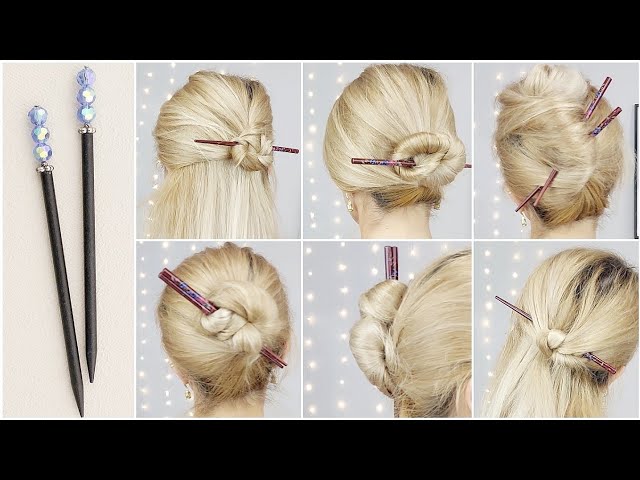
Chinese hair pins may look delicate, but many are surprisingly practical once you learn the basic technique. The key is to create enough twist and tension in the hair so the pin can anchor securely.
1. The Simple Low Bun
The low bun is one of the easiest hairstyles with Chinese hair pins. It is calm, neat, and suitable for daily wear.
To create it, gather your hair at the nape of your neck. Twist the hair into a rope, then coil it into a bun. Hold the bun with one hand. Insert the hair pin from the outer edge of the bun, angle it toward the scalp, catch a small section of hair near the head, then turn the pin back through the bun. This creates a locking effect.
This style works well with wooden, metal, or jade-style pins. It is ideal for beginners because the bun sits low and is easier to control.
2. The Classic Twisted Bun
The classic twisted bun is slightly more structured than the low bun. It can be worn at the back of the head or slightly higher for a more elegant look.
Start with brushed hair. Gather it into a ponytail shape without using an elastic. Twist the full length of the hair and wrap it around itself. Insert the Chinese hair pin through one side of the bun, rotate it gently, and push it through the center so it catches both the bun and the hair underneath.
This hairstyle is simple, but it creates a refined silhouette. It is especially beautiful with a longer decorative hair pin.
3. The Half-Up Hair Pin Style
For readers who do not want to put all their hair up, the half-up style is a gentle introduction. It works well for medium to long hair and feels soft, romantic, and wearable.
Take the top half of your hair and twist it loosely at the back of your head. Coil the twist into a small bun or fold it into a loop. Insert the hair pin through the twist and secure it. Leave the rest of the hair flowing naturally.
This style is less demanding than a full bun because it uses less hair. It also allows the hair pin to become a visible decorative accent.
4. The Messy Everyday Bun
A Chinese hair pin does not have to be worn only with formal hairstyles. It can also work beautifully with a relaxed everyday bun.
Gather your hair loosely, twist it into a casual coil, and secure it with the pin. Allow a few soft strands to fall around the face. This style looks natural and modern while still showing the graceful line of the hair pin.
For this hairstyle, a simple wooden or matte metal pin often works best. Highly ornate pins may feel too formal for a messy bun, unless you enjoy a contrast between casual hair and decorative detail.
5. The Folded Bun for Long Hair
If you have long hair, a folded bun can be easier than a tight coil. Gather your hair, twist it lightly, fold the length upward, and tuck the ends under. Slide the hair pin horizontally or diagonally through the fold, catching hair near the scalp for support.
This creates a smooth, elongated shape. It is a good option for thick or long hair that feels heavy in a small bun.
6. The Braided Bun with a Hair Pin
A braid gives the hair more texture, which helps the pin hold securely. Braid your hair first, then coil the braid into a bun. Insert the hair pin through the bun as you would with a normal twisted bun.
This style is beginner-friendly because the braid keeps loose strands together. It also gives the final hairstyle a more detailed appearance without requiring advanced styling skill.
How to Choose the Right Chinese Hair Pin
Consider Your Hair Length
Shorter hair usually needs a smaller, lighter pin. Medium hair can work with many standard pins. Long hair may need a longer and stronger pin to hold the weight of the bun.
Consider Your Hair Texture
Fine hair often needs more tension, texture, or a smaller pin. Thick hair may need a sturdy pin made from wood, metal, or strong acetate. Very smooth hair can be harder to secure, so a slightly textured bun or braid may help.
Start with a Simple Shape
Beginners should start with a smooth, practical hair pin before trying heavy decorative designs. A simple stick-shaped pin is easier to insert and less likely to catch in the hair.
Match the Pin to the Occasion
For daily wear, choose wood, simple metal, or understated jade-inspired designs. For photos, cultural events, formal dinners, or traditional outfits, a more decorative pin with floral, pearl, or dangling details may feel appropriate.
Wearing Chinese Hair Pins Respectfully
Because Chinese hair pins are connected to cultural history, it is worth wearing them with awareness. Respectful styling does not mean you must be Chinese to appreciate the accessory. It means you should avoid treating it as a novelty, costume joke, or vague “exotic” object.
A respectful approach is simple: learn the name and background of the accessory, understand that designs may carry meaning, avoid mixing sacred or ceremonial elements carelessly, and choose styling language that is appreciative rather than exaggerated.
Chinese hair pins can be worn beautifully in modern life. They can be paired with a dress, blouse, linen shirt, sweater, qipao-inspired outfit, hanfu, or minimalist everyday clothing. The key is to let the accessory remain elegant, not theatrical.
Styling Tips for a Natural Editorial Look
Keep the Hair Soft
Overly stiff hairstyles can make a hair pin look like a costume piece. A soft bun, natural texture, or gentle face-framing strands often feel more modern.
Let One Detail Stand Out
If the hair pin is ornate, keep earrings and necklaces simple. If the hair pin is minimal, you can add more detail elsewhere.
Use the Right Angle
A diagonal placement often looks graceful and helps the pin hold securely. Horizontal placement can feel calm and balanced. Vertical placement is more dramatic and may need a stronger bun.
Do Not Force the Pin
If the pin bends, pulls, or feels unstable, redo the bun with less hair or more twist. A hair pin should slide firmly through the style, not be forced through a knot.
FAQ
Are Chinese hair pins easy to use?
Yes, but they require a little practice. The most important technique is learning how to twist the bun and insert the pin so it catches both the bun and the hair underneath.
What is the easiest hairstyle with Chinese hair pins?
The simple low bun is usually the easiest. It is stable, beginner-friendly, and works with many hair types.
Can Chinese hair pins hold thick hair?
Yes, but thick hair usually needs a stronger and longer pin. Wood and metal pins are often better for heavy hair than delicate decorative pins.
Can I wear a Chinese hair pin with modern clothing?
Yes. Chinese hair pins can look beautiful with modern outfits, especially when styled simply. A low bun with a wooden or jade-style pin pairs well with everyday clothing.
Are Chinese hair pins only for traditional outfits?
No. Although they have traditional roots, many Chinese hair pins can be worn in contemporary hairstyles. The key is to style them thoughtfully and respectfully.
What is the difference between a hair pin and a hair stick?
The terms are sometimes used casually and overlap in modern shopping language. A hair stick is often a simple stick-like tool for securing hair, while a Chinese hair pin may also refer to more decorative traditional forms with cultural motifs.
Do I need long hair to use a Chinese hair pin?
Medium to long hair works best. If your hair is shoulder length, you may be able to use a small pin for a half-up style or small twist.
Are jade hair pins traditional?
Jade hair pins have a long association with Chinese ornament and craftsmanship. Modern jade-style pins may use real jade, other stones, glass, resin, or imitation materials, so it is important to check the product description if material matters to you.
Conclusion: Everyday Beauty with Cultural Depth
Chinese hair pins are beautiful because they combine function, craftsmanship, and cultural memory. They can hold the hair in place, complete a simple outfit, and connect modern styling with a long tradition of Chinese beauty.
For beginners, the best way to start is with easy hairstyles: a low bun, a twisted bun, a half-up style, or a braided bun. Choose a pin that suits your hair length and texture, begin with simple designs, and practice the basic locking motion.
The more you learn about Chinese hair pins, the more meaningful they become. They are not just accessories placed in the hair. They are small objects shaped by history, ceremony, artistry, and everyday grace.