A wedding updo is never only about arranging hair. In many cultures, the way a bride wears her hair expresses maturity, dignity, family blessing, and the beginning of a new stage of life. In Chinese tradition, this meaning is especially rich. Hairpins, combs, crowns, floral ornaments, and dangling pieces were not simply accessories placed into a hairstyle at the last moment. They belonged to a wider language of beauty, social identity, ritual, and auspicious symbolism.
For modern brides searching for Chinese hair accessories for wedding updo styles, the appeal is often both visual and emotional. A delicate gold hairpin can soften a low bun. A red-and-gold comb can echo the color language of Chinese wedding dress. A pearl or jade-inspired ornament can add quiet refinement. A phoenix motif can suggest joy, grace, and ceremonial beauty without feeling overly theatrical.
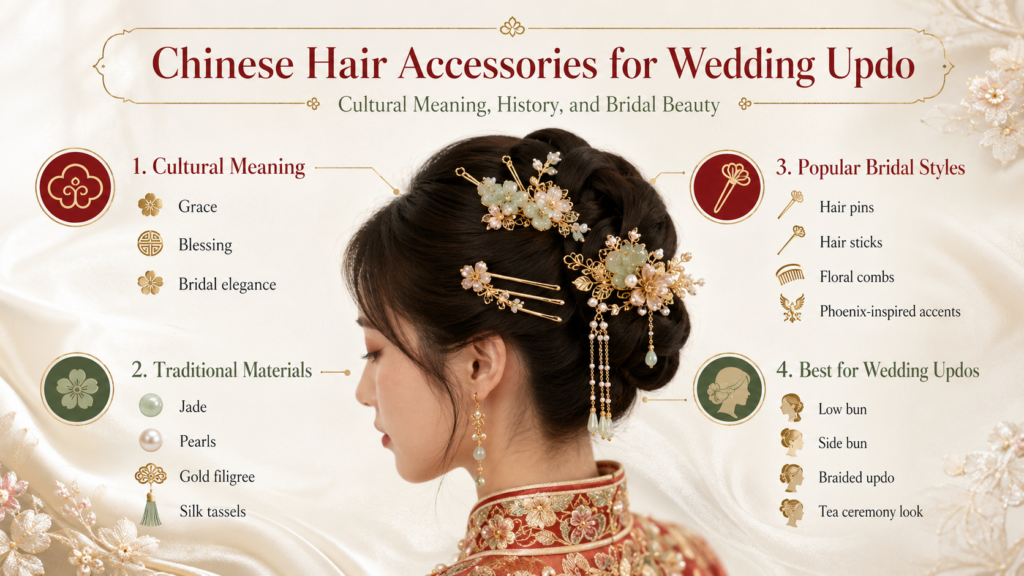
Yet these pieces are most meaningful when they are understood with care. Chinese bridal accessories vary across dynasties, regions, ethnic groups, family traditions, and modern personal taste. Not every bride in history wore the same ornament, and not every symbol had only one meaning. This article offers a beginner-friendly cultural introduction: where these accessories come from, what they often symbolize, and how they can be worn in a contemporary wedding updo with elegance and respect.
Why Hair Matters in Traditional Chinese Beauty
Hair has long held symbolic importance in Chinese culture. In traditional society, the styling of hair could suggest age, gender, marital status, social role, and ritual occasion. Loose or braided hair, arranged buns, decorated topknots, and formal headdresses all communicated something about the person wearing them.
For women, the hairpin was especially significant because it helped transform hair from a youthful style into an adult arrangement. In historical practice, a young girl’s transition into womanhood could be marked by a hairpin ceremony, often associated with the term ji li or “hairpin ceremony.” During such a rite, the hair was gathered and secured, visually marking a new stage of life.
This background gives Chinese wedding hair accessories a deeper emotional layer. A bridal updo is not just neat, elegant, or photogenic. It can also suggest composure, readiness, and the joining of personal beauty with family blessing.
A Short History of Chinese Hairpins and Bridal Ornaments
Chinese hair accessories developed over many centuries. Early hairpins were often functional objects used to secure hair, but they gradually became more refined in shape, material, and decorative meaning. Over time, hairpins could be made from bone, bamboo, wood, jade, bronze, silver, gold, and other materials. Wealthier families and elite women might wear more elaborate pieces, while simpler pins remained practical and graceful in everyday life.
Ji, Zan, and Chai: Understanding the Basic Forms
Several traditional terms are often connected with Chinese hairpins:
Ji usually refers to an early or simple hairpin form. It was used to fasten hair and is closely associated with the coming-of-age hairpin ceremony.
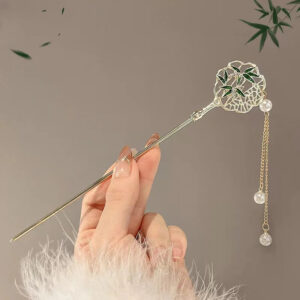
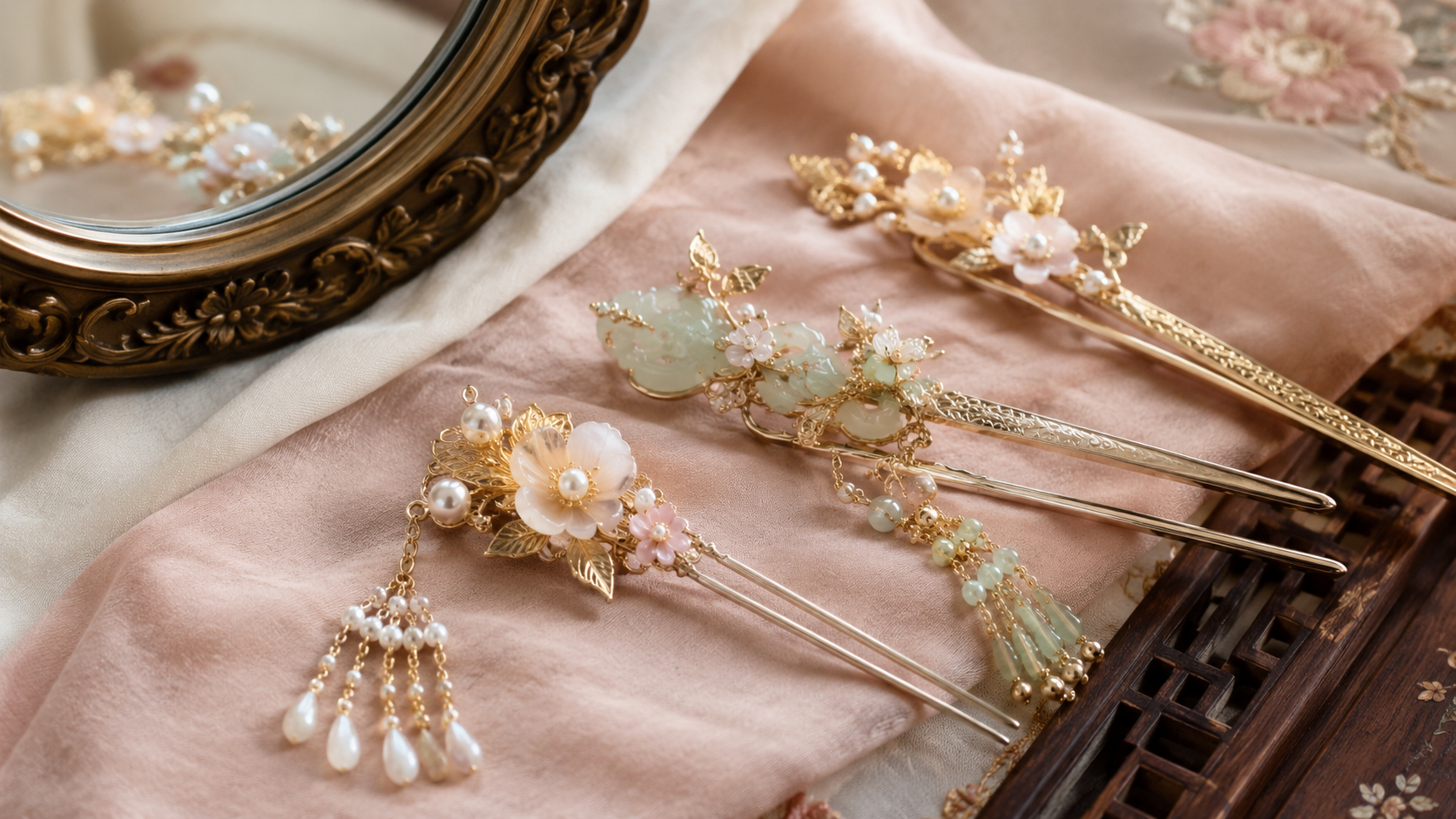
Zan is often used for a decorative single-prong hairpin. In modern hanfu-inspired styling, “zan” is one of the most familiar terms for Chinese-style hairpins.
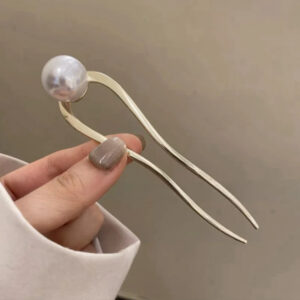
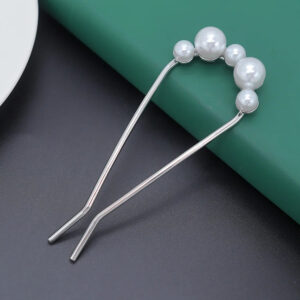
Chai usually refers to a two-pronged hairpin. Because it has two stems, it can sit more securely in a bun or updo. Chai may also appear in bridal and formal styling when a balanced, symmetrical look is desired.
For a wedding updo, these forms can be used in different ways. A single hairpin may create a quiet poetic effect. A pair of pins can frame a bun. A two-pronged piece can add stability and ornament at the same time.
From Functional Tool to Cultural Ornament
The beauty of Chinese hair accessories lies in their dual nature. They are useful, but they are also expressive. A hairpin holds the hair, but it may also display a flower, a bird, a cloud, a pearl, or a small dangling ornament that moves gently as the bride walks.
This combination of structure and softness is one reason hairpins remain so appealing for wedding updos. They can secure a hairstyle while adding movement, light, and cultural atmosphere.
Chinese Wedding Hair Accessories and Their Symbolism
Chinese wedding accessories often draw from a wider world of auspicious imagery. These motifs should not be treated as magical decorations. They are better understood as visual wishes: for harmony, happiness, dignity, beauty, continuity, and a peaceful married life.
The Phoenix Motif
The phoenix is one of the most recognizable motifs in Chinese bridal imagery. In traditional wedding aesthetics, it is often associated with feminine grace, high status, renewal, and auspicious beauty. Phoenix-inspired crowns and ornaments can appear dramatic, but the motif can also be interpreted in a subtle way through small bird-shaped hairpins, wing-like details, or gold filigree.
A bride does not need to wear a full phoenix crown to honor this idea. A modest phoenix hairpin placed into a low bun can suggest the same cultural reference in a quieter modern form.
Flowers and Botanical Motifs
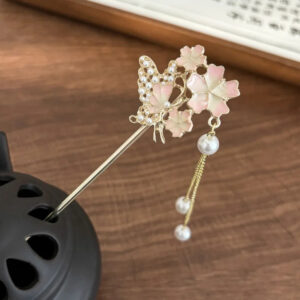
Flowers are common in Chinese hair accessories because they bring softness and seasonal beauty to the hairstyle. Peonies are often associated with richness, honor, and feminine elegance. Lotus motifs can suggest purity and harmony. Plum blossoms may evoke resilience and quiet strength.
For a wedding updo, floral ornaments work especially well because they can blend traditional meaning with contemporary bridal styling. A bride wearing a red qipao, qun kwa, hanfu-inspired dress, or modern white gown can all use floral hair accessories in different ways.
Jade-Inspired Ornaments
Jade has a long and respected place in Chinese material culture. It is admired for its smooth texture, subtle glow, and associations with refinement. In bridal styling, jade-inspired hairpins or combs can create a calm, graceful mood. They are especially suitable for brides who prefer understated elegance rather than heavy gold ornamentation.
A pale green or white jade-like hairpin can pair beautifully with ivory silk, soft red embroidery, or a minimalist wedding dress.
Pearls, Gold, and Red Details
Pearls add softness and light. Gold suggests celebration, warmth, and prosperity. Red is one of the most important colors in Chinese wedding aesthetics because it is closely linked with joy and good fortune.
When used together, red and gold can create a festive bridal look. But balance matters. If the dress is already heavily embroidered, a simpler hairpin may look more refined. If the dress is minimal, a more detailed comb or floral ornament can become the main cultural accent.
The Hair-Combing Ceremony and Bridal Preparation
One of the most meaningful Chinese wedding customs connected with hair is the hair-combing ceremony. In many families, this ritual is performed before the wedding, often by a respected elder or a person considered fortunate in family life. The details vary by region and family, but the ceremony commonly expresses blessings for harmony, longevity, and a smooth transition into marriage.
The comb itself becomes more than a grooming tool. It represents care, order, and blessing. The act of combing the hair before the wedding can be a quiet moment between the bride and family, especially the women who helped raise and guide her.
Modern brides may adapt the ceremony in personal ways. Some follow a family tradition closely. Others keep only a symbolic version, such as using a meaningful comb, inviting a mother or grandmother to help prepare the hair, or placing a family heirloom near the styling table. The most respectful approach is not to copy a ritual mechanically, but to understand what it is meant to honor: family continuity, blessing, and the bride’s transition into a new life stage.
How Chinese Hair Accessories Work in a Wedding Updo
A wedding updo gives Chinese hair accessories a beautiful foundation. Because the hair is gathered, the ornament can be seen clearly and can also help shape the overall silhouette.
Low Bun with a Single Hairpin
A low bun is one of the easiest styles for beginners. It feels elegant, calm, and timeless. A single Chinese hairpin can be inserted diagonally across the bun, allowing the decorative end to sit slightly above or beside the hair. This style works well for brides who want a cultural touch without a very formal headdress.
Best for: modern weddings, tea ceremonies, civil ceremonies, minimalist bridal looks.
Side Bun with Floral Ornament
A side bun allows floral or phoenix-inspired accessories to frame the face. This style creates a softer, more romantic effect. It works especially well with dangling ornaments, tassels, or small pearl details because movement is visible from the front and side.
Best for: qipao styling, garden weddings, bridal portraits, reception looks.
Centered Updo with Pair Hairpins
A symmetrical updo can hold a pair of hairpins or combs on either side. This creates a formal and balanced appearance. It is a good choice for brides wearing traditional red attire, embroidered collars, or richly patterned fabrics.
Best for: tea ceremonies, family portraits, hanfu-inspired bridal styling.
Braided Updo with Small Pins
For a gentler modern look, small Chinese-style pins can be placed throughout a braided updo. This approach feels less ceremonial but still culturally inspired. It is suitable for brides who want subtle details rather than one large statement piece.
Best for: outdoor weddings, mixed-cultural weddings, bridesmaids, second-look styling.
Choosing the Right Chinese Hair Accessories for a Wedding Updo
The best accessory depends on the dress, hairstyle, ceremony type, and the bride’s own comfort. A beautiful piece should not overwhelm the face or compete with the wedding outfit.
Match the Accessory to the Dress
If the dress is red and gold with heavy embroidery, choose a hair accessory that echoes the colors but does not duplicate every detail. A gold floral comb, pearl hairpin, or small phoenix ornament may be enough.
If the dress is white, ivory, or champagne, a jade-inspired pin, pearl comb, or delicate gold ornament can create a refined East-meets-West bridal look.
If the bride wears hanfu-inspired wedding attire, larger hair ornaments may feel more natural because the clothing itself often has a more historical silhouette.
Consider the Weight
Traditional-looking bridal ornaments can be heavy. A beautiful accessory is not useful if it slips, pulls, or becomes uncomfortable during the ceremony. Brides should test the piece before the wedding day, especially if the hairstyle must last through a tea ceremony, photo session, banquet, or reception.
Lightweight pins, secure combs, and well-placed hair grips can make a major difference.
Think About Meaning, Not Only Appearance
A bride may choose a phoenix motif because she loves the visual shape. She may choose jade because it reminds her of family jewelry. She may choose a comb because it connects to a hair-combing ceremony. She may wear a piece passed down from a mother or grandmother.
The most meaningful accessory is often not the largest or most expensive. It is the one that feels connected to the bride’s story.
Wearing Chinese Bridal Hair Accessories Respectfully
Because Chinese wedding accessories carry cultural meaning, they should be worn with awareness. This does not mean modern brides cannot adapt them. Chinese culture itself has always changed across time, place, and personal circumstance. But thoughtful styling matters.
Avoid treating traditional accessories as costume pieces. Learn the name or background of the item if possible. If borrowing from a tradition that is not your own, choose pieces with restraint and respect, and avoid exaggerated claims about sacred or mystical meanings.
For brides of Chinese heritage, hair accessories can be a gentle way to reconnect with family history, even if other parts of the wedding are modern. For multicultural weddings, they can serve as a bridge between traditions when chosen with care.
Common Mistakes to Avoid
One common mistake is over-accessorizing. A wedding updo can become crowded if it includes a large comb, multiple pins, heavy earrings, and a detailed veil all at once. Chinese bridal beauty often works best when there is visual harmony.
Another mistake is ignoring hairstyle structure. Some hairpins are decorative rather than load-bearing. They may not hold the bun securely by themselves. A stylist should build the updo first, then add the ornament safely.
A third mistake is mixing too many unrelated motifs. Phoenix, peony, lotus, jade, tassels, pearls, and butterflies can all be beautiful, but they do not need to appear together. Choose one main idea and let the rest of the look support it.
FAQ
What are the best Chinese hair accessories for a wedding updo?
The most popular choices include hairpins, two-pronged pins, decorative combs, floral ornaments, pearl pins, jade-inspired pieces, and phoenix-style accessories. The best option depends on the hairstyle, dress, and ceremony style.
Can I wear Chinese hair accessories with a white wedding dress?
Yes. Many modern brides pair Chinese hairpins or combs with white, ivory, or champagne gowns. Gold, pearl, and jade-inspired accessories usually work especially well because they add cultural detail without clashing with a Western-style dress.
Are phoenix hair accessories only for traditional Chinese weddings?
No. A full phoenix crown is more ceremonial and strongly associated with traditional bridal imagery, but smaller phoenix-inspired hairpins can be worn in modern weddings as a subtle cultural reference.
What is the meaning of a Chinese bridal hair comb?
A bridal comb can be connected with the Chinese hair-combing ceremony, a wedding custom that expresses blessings for harmony, longevity, and a smooth transition into marriage. The exact meaning varies by family and region.
Should the hair accessory match the qipao or qun kwa?
It should harmonize with the outfit rather than match it exactly. If the dress is highly detailed, choose a simpler accessory. If the dress is plain, a more decorative piece can create a beautiful focal point.
Can bridesmaids wear Chinese hairpins?
Yes, but bridesmaids should usually wear smaller and simpler pieces so the bride remains the visual focus. Small floral pins or delicate pearl hairpins are good choices.
Conclusion
Chinese hair accessories for wedding updo styles carry a beauty that is both visual and cultural. A hairpin may hold a bun in place, but it can also suggest adulthood, dignity, blessing, and family memory. A comb may smooth the hair, but it can also recall the quiet tenderness of bridal preparation. A phoenix ornament may sparkle in photographs, but it also belongs to a long tradition of auspicious bridal imagery.
For modern brides, the most elegant approach is not to wear every symbol at once. It is to choose carefully. A single jade-inspired pin, a gold floral comb, a delicate phoenix piece, or a family hair ornament can bring depth to a wedding look without overwhelming it.
When chosen with respect, Chinese bridal hair accessories do more than complete an updo. They connect beauty with heritage, and personal style with cultural meaning.